Hidden in Plain Sight: The Silent Epidemic of Substance Abuse in Older Adults with Dr. John Dyben - Episode 130
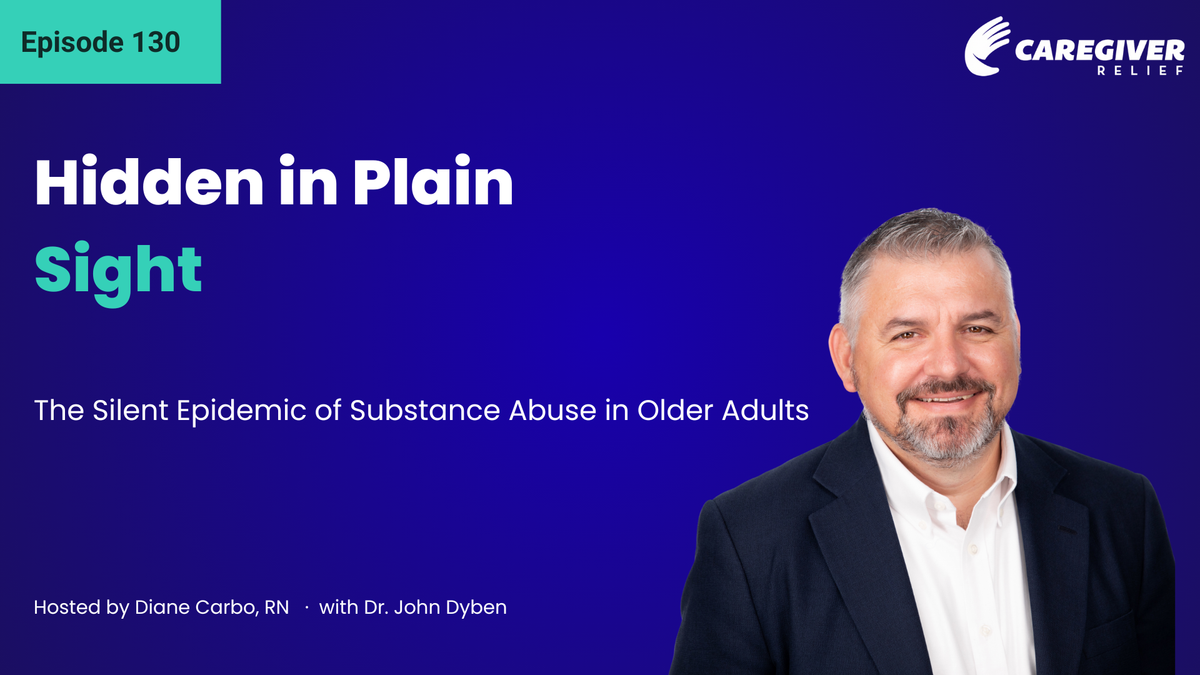
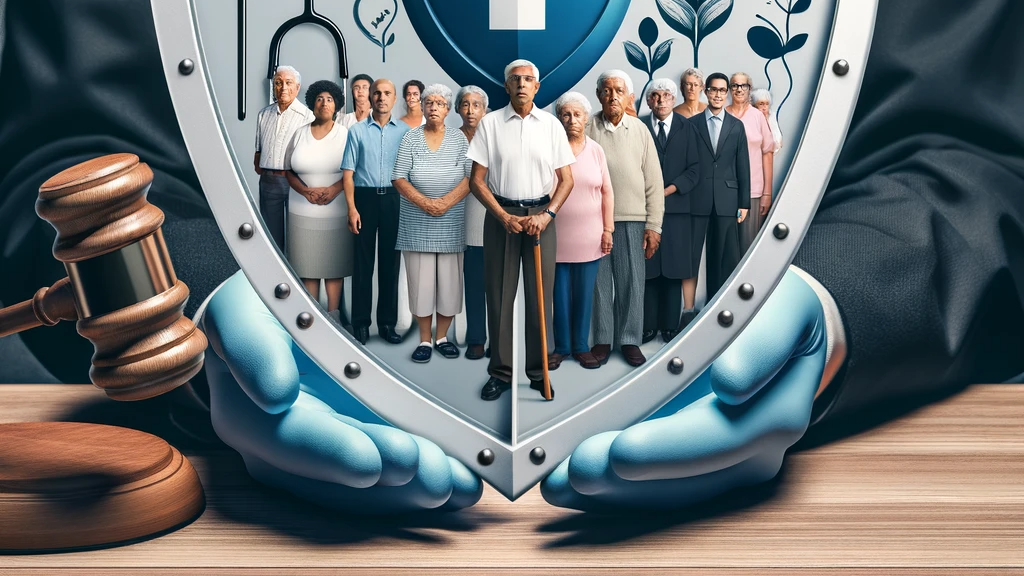
The latest episode of the Caregiver Relief Podcast, featuring host Diane Carbo, RN, and guest Dr. John Dyben, Chief of Research and Innovation for Hanley Foundation, delves into a critical and often overlooked issue: substance abuse in older adults. This "silent epidemic" has devastating consequences for seniors, families, and caregivers.
Dr. Dyben, with his extensive background in addiction counseling and a focus on substance abuse in older adults, shares his expertise and calls attention to why this problem is so frequently missed and what can be done to help.
🗝️ Key Takeaways from the Conversation
- The Silent Epidemic: Millions of older adults meet the criteria for a substance use disorder, yet the issue is often hidden in plain sight.
- Why it's Missed: Seniors may not have jobs or travel, so the visible signs of addiction (like DUIs or missed work) are absent, leading to a cultural belief that the problem doesn't exist.
- Discount People: There's a myth that life engagement becomes less important or valuable as we age, contributing to the problem being ignored.
- Most Common Substances:
- Alcohol: It is absolutely the most common drug causing a substance use disorder in older adulthood.
- Physiological Changes: As people age (especially after 40), the body's ability to metabolize alcohol changes (due to a decrease in total body water), causing the same amount of alcohol to raise blood alcohol levels faster and keep them raised for longer.
- Cannabis: It is the second most common substance causing issues, though far behind alcohol.
- Prescription Drug Abuse:
- Problematic Drugs: Opioids and benzodiazepines (like Xanax) have very high addiction potential and are often combined with alcohol, which has a synergistic, skyrocketing effect on addiction.
- Misconceptions: It was once a common belief that if addiction didn't develop by age 40, it never would, but this is untrue—a person can cross over into addiction at any age.
- Grief and Anxiety: Medications like benzodiazepines can act as "emotional anesthesia" and only push a pause button on the grief process, hindering successful coping.
- Challenges in Diagnosis:
- Practitioners often look for causes associated with aging, not substance use, because symptoms of addiction (falls, memory problems) can mimic common age-related issues.
- Older adults are more likely to have at least two other chronic medical conditions, which practitioners triage, often missing the underlying substance issue.
- Caregivers' Role and Risk:
- The chronic stress of caregiving is immense, with 63% of family caregivers becoming seriously ill or dying before the person they are caring for.
- Caregivers may turn to alcohol or drugs to cope, which is a dangerous and unhealthy way to deal with distress.
- Effective Treatment Approaches:
- Peer Groups: Patients in older adult-specific programs have significantly better outcomes when they are in a peer group of other older adults.
- Holistic Care: Treatment must be interdisciplinary, addressing medical needs with geriatric-competent professionals, as well as psychological and social needs.
- Significance and Spirituality: The second half of life involves a movement from success to significance, and addressing issues of personal spirituality (which is the number one predictor of higher quality of life in older adulthood) is critical for healing.
📞 Seeking Help and Finding Hope
Dr. Dyben encourages anyone concerned about a loved one's substance use to seek professional help. It is a healthcare issue that should not be handled alone.
- Look for medical and clinical professionals who have specialized training and credentials in addiction (e.g., American Board of Addiction Medicine).
- Hanley Foundation: Visit hanley center.org or hanley foundation.org for more information and to find help in your area.
- Help for Children: Hanley Foundation, in partnership with the National Association of Children Impacted by Addiction, offers a free three-day program for children ages 7-12 impacted by addiction.
The greatest hope for addressing this epidemic lies in increasing awareness, training, and encouraging people—both professionals and those with personal experience—to tell their stories.
💖 A Message to Caregivers
Diane Carbo reminds all listeners: "You are the most important part of the caregiving equation. Without you, it all falls apart. So please learn to be gentle with yourself. Practice self-care every day because you are worth it."
Would you like me to find the links for the Hanley Foundation's resources or information on geriatric addiction specialists?
Podcast Episode Transcript
Diane: Welcome to the Caregiver Relief Podcast. I'm Diane Carbo, rn, your host today.
Diane: Today's episode is titled, hidden in Plain Sight, the Silent Epidemic of Substance Abuse in Older Adults. This is an issue that too often goes unrecognized, but has devastating consequences for seniors, families, and caregivers.
And I'm honored today to be joined by Dr. John Dyben, an accomplice researcher, counselor, and national speaker who currently serves as Chief of Research and Innovation for Hanley Foundation, with advanced training in psychology, family therapy, addiction counseling, and healthcare leadership, and even a doctoral practicum focused specifically on substance abuse in older adults. John brings a wealth of information and expertise to this urgent topic. Together we'll uncover why this problem is so often missed, and what signs caregivers should be watching for, and what solutions exist to help seniors find hope and recovery. John, thank you so much for taking time outta your busy day.
this is such an important topic, and one that's. Always overlooked.
John: Thank you so much for having me. I agree. Anytime we get to talk about this, it's so critical. So thank you for making this a topic today.
Diane: I'm an adult child of an alcoholic and I see it so everywhere, so I really think that this is, we needed to talk about this.
before we dive into the really nitty gritty, can you share what inspired you to focus your on substance abuse in older adults?
John: So I, I started my career, I actually started my career as a pastor in church ministry and went to seminary. And when I started, I was, I thought, I'm gonna, Just be a theologian and be a kind of a heady thinking guy. And it was in my very first, I was probably 19 years old, the very first, time I was,actually working with a group of kids and inner city kids. And I learned real quickly that they didn't care about my ability to discuss the finer parts of the metaphysics of morals.
I was, I could listen to them and that helped them. And so I said, you know what, I'm gonna change my major. I changed to psychology and even when I went to seminary, it was focused on counseling. And I said, I'm gonna work with adolescents the rest of my life. I never wanna work with anybody, over the age of 30.
that's the, and. over the years, and I did, I worked for Boystown. I did a lot of work with children and adolescents. But a little over 21 years ago, I through a long, relationships and different things, I came to Hanley Center. Hanley Center is a facility in West Palm Beach.
At the time, it was still part of Hazelden and Hanley Center had three major programs at the time. We have many more now, but at the time there was a men's program, a women's program, and there was an older adult program. And the older adult program was the only one in the entire. Country. Yes. In our nation's history was the, and I thought, and I was working on the men's unit and I, said, I'm just gonna keep working on the men's unit because I believed some myths that I think a lot of us in our culture, good people loving, wonderful people, have believed.
And one of the things that I thought is, the, this idea of, almost what's the point if, why in the world if someone has gone all this way, they're, 70 years old, 80 years old, 85 years old, or what if, you know what. Why does it really matter if they have addiction?
And I'm sorry to say that I, I think that's a common belief. And I had that, and I met the lady who had literally written the only book on the subject. She literally had bullied Hazelden into allowing her to develop this program. and I became friends with Carol Coran, and Carol has since passed.
but, Carol, saw the problem. What she said is she looked at this men's program and women's program, and every once in a while you would get an older adult. And she said, and one of the two things would happen. Either they would look around and go, this isn't for me. And they would sit and they would be quiet and they would be the perfect patient.
And so they'd get no attention and they'd do no work. Yes. And then after a certain amount of time, they would go or they would become. Dad or mom or grandpa or uncle or aunt to the group, and they take care of everybody else. Yeah. And she said that she did her research and she realized older adults have different need from younger adults in treatment and treatments built for younger adults.
And so she bullied her way. and anybody who knows or has ever met her and hears this go, yes, they know that she was said that older adults deserve it. And she became a mentor of mine, challenged every one of those false beliefs that I had about older adults that I didn't know that I was carrying. and that started me on a journey of working with that population, realizing how incredibly, devastating.
Addiction is in older adulthood. and it just gave me a passion for researching that and for making it known to people as much as we can.
Diane: God bless you for bringing this. And God bless, Carol. 'cause I will tell you yes. I cannot tell you how many people, seniors have avoided going to rehab for treatment because it was all young children, or young kids or young adults and they couldn't relate.
And they're saying this, and you're right, they say, it's not for me. And I am so excited that I can actually tell people about your program because it's so desperately needed, because we really do have the silent epidemic. And, could you explain to my listeners, why we call this issue a silent epidemic?
John: Absolutely so there are estimates that somewhere around 5 million older adults in the United States today, and this is a rough estimate, but even if it's anywhere, even near close, imagine that meet criteria, if they walked into my office for an assessment, if they walked into you for a clinical as right for an assessment, we would.
They would meet criteria for a diagnosis of some kind of substance use disorder. alcohol is still the number one. Yeah. So you've got millions of people that, what that means is that the quality of their life, in the time where life is short test In the time where quality of life, quality of relationships, that there's this idea that we reach a certain age and our ability to fully engage life becomes less important or less valuable.
And that's such a myth. It's such a alive, the reality is that my ability, a and I think of both of my parents, they're approaching 90, they are still alive today. and they, their ability to fully engage in relationships with their children and their grandchildren and their great-grandchildren is so important and.
There is this myth, there's this idea within our culture of what I call discount people. Because you see, the reality is, I'm still a guy in my, I'm living a very active life and I'm working and I'm raising kids and I've got adult kids and I'm doing all these things. if I were to develop an addiction today, you'd know it, you would see it, you'd experience that.
I wouldn't be showing up for work. I'd be getting DUIs. I'd be, but if one of my parents was to develop an addiction today, they don't have work to show up for. They don't really need to travel all that much. and so our culture would not see it because if we don't see it and experience it, we don't think it exists.
And so these folks suffer often in silence, and there's millions of 'em.
Diane: And social isolation in seniors is rampant. And it's really sad because so many, we don't have enough youth to take care of our seniors. This, and it's, it's, it really is a, an epidemic. it's a cultural societal problem that we need to address.
I'm 72. I had a grandmother who lived into her late nineties. And, when we ki we grandkids got married and moved away, she got very lonely and she always hid her drinking and we discovered it. she would buy a box of wine and right in her room. she was really a upscale, drinker.
Let me tell you. Buy a box of wine and hide it in her room and drink it so that she, so nobody knew. And of course, when you go to visit when you're from out of town, you find these things and you see the issues. And it just broke my heart. 'cause she never drank when she was younger.
Just something I guess she was trying to sedate herself. using people will take it, use the excuse I'm using it for sleep when it's not a good sleeping medication at all. so how widespread, is substance abuse and what are most commonly, drugs or substances are most commonly used by seniors?
John: alcohol is absolutely by far the most common, drug that would cause a substance use disorder that's problematic in older adulthood. And one of the things that's. Really that kind of exacerbates that is, because I am also, I am an aging American, whether I like it or not. Hi, I'm John and I'm an aging American.
and that's the way it all of us are. but as we age, and especially after we hit around 40, our bodies change. And one of the changes is the way we metabolize drugs, especially alcohol changes. and one of the things that's really important is that we decrease, we have a decrease in total body water.
And so that's all the fluids in there that are really important for, for decreasing or for metabolizing alcohol. Yeah. So what it basically means is a glass of wine that I had at 30 years old
If I am exactly the same height and weight. At 60 years old, that same glass of wine in that same body, just 30 is going to raise my blood alcohol level faster and keep it raised for longer.
And so people will, one of the most famous, things that we saw was, and I love her for her honesty, Ruth Bader Ginsburg, who is this brilliant, no matter what anybody thinks politically, she was brilliant, lawyer. She was, a Supreme Court Justice. And there was an incident that occurred during the Obama, I think it was the, one of the, state of the Union addresses.
She fell asleep. Now she think about this, right? So this is a brilliant person. She knows the world is watching her and she let herself fall asleep. They famously, everybody made a big deal of it and they said, what? What happened? And she said, here's what happened. I'm gonna tell you the truth. Every, it is tradition that before the State of the Union, we have a spaghetti dinner.
And one of the justices brought. Nice, super nice bottle of wine or two, and I had a glass, or she might have had two. It's not like they were having a kegger. But what she said is, this is the normal, I would normally drink this and it would've no effect on me.
Diane: Yes. But
John: I have to be honest, even though I don't want to admit it
Diane: Alcohol is having a greater effect on me than it ever has. That's tough to admit. None of us want to admit that our bodies are changing and such. Exactly. So what we see, number one is alcohol is by far the number one, and we're talking again about 5 million estimates are about 5 million people would meet criteria for an alcohol use disorder.
John: Meaning that their use is starting to cause problems in their lives. Interestingly, cannabis, I'm sorry, but
Diane: no, go ahead. No, go ahead. The
John: number two, it's far behind, but the number two is actually cannabis.
yes.
Diane: I,as a nurse, we, we would go into, in some nursing homes or in assisted living, and one of the things it, people that wanted drinks, the doctors would have to write a script for it, write a, write an order for it.
Okay. And we called, it was called Spirits of Fermenti. And all it was whiskey. And I had patients eat well into their nineties that had a standing order, that had to have it every day. And I'll never forget this one little lady, God bless her, she was so tiny and she looked malnourished and very wealthy.
And I would give her a, it was a her martini every day. And if I was late, wow, Lord have mercy. There was held to be paid. And it was really, it was challenging because I could see how it was impacting her, but people just accepted it, that it was okay for her to be off balance and have slur, slurred speech, for such a long period of time afterwards.
So I, I see it all the time.
John: and this is why I love nurses because e even, the problem, you describe it In the actual, what are the problem if someone there is, I have, sometimes people think that those of us that work in addiction, we have some, we think, we moralize or think, it's ba it's a moral thing to drink or we're exactly the opposite.
If alcohol or any other drug does not cause problems in your life, I'm not gonna make a point of it exactly, but when it is causing you to be in that case, that patient is off balance, a risk of falling and hurting herself. But more than anything, what I see is that it causes disconnect between older adults.
The most important relationships in their lives. Yes. And I see it again and again. In fact, that's what brings most older adults to treatment. Very often the intervention or the final thing that will bring an older adult to treatment is a grandchild, saying, Hey grandma, grandpa, I love you. I every time I come over, I used to love our talks and we, I can't talk to you anymore 'cause you're that slurred speech.
I know you're intoxicated and I love you and I want to have that relationship again, but we're disconnected and that is, it's so powerful.
Diane: Yes. Yeah. I worked in some upscale, assisted livings and I had a liquor store, call me one dime of, because one of my clients, now, I have to tell you, in assisted living, you're on your own.
You can do whatever you want. And if you wanna go to the liquor store and it's safe, for you to drive there and come back, I can't stop you. And they were calling me because this guy was buying so much booze every week and they were having parties in his room. And the thing is that these guys, we had issues because.
Arguments and fights started to occur. And and it's that, I don't care if you drink, I just don't, I care when it impacts other people or it impacts the personal safety of somebody else and or yourself. And, it was a challenge, because I had, we couldn't, we were limited to what we could do.
And we had to go to the adult children who were like, oh my God, we didn't know Dad was this bad. hello. Oh, trust me. And he was going through his finances, that's huge.
John: and those, all of those things are those problems that go, if those problems weren't there, we're not the, we're not the drinking police.
We don't have the but we are healthcare providers and our job is to help people have full health and full health. I love the World Health Organization in 1946. I'm pretty sure that's the right, someone's gonna check me out. It might be 14, but prior to my birth,
or the World Health Organization grappled with how are we gonna define the word healthy?
How are we gonna, define that. and what they came up with is a simple definition and I'm gonna butcher it. I encourage people to, to look it up. It's so beautiful. but the definition is that health is not merely a state of not being in disease. But it is. Physical, mental and spiritual sense of wholeness.
It is a sense of, oh, whole person wellness. And it's amazing. That is still the World Health organization's definition, but it's wild that this, it sounds very hippie dippy, but it was 1940s that they said it's, it health is more than just, than just, you're not having a disease.
Diane: That's beautiful. I love that definition. It really
John: is.
Diane: Yeah. Yeah. we have a problem with prescription medications in this country. how is that contributing, addiction to this population as well?
John: not only addiction, because if you look at opioids and that's where there, there's, there are two main categories of prescription drugs that we see as very problematic, that have very high addiction potential.
Of course, that's opiates. benzodiazepines are those things like Xanax is probably the most common that people are gonna be familiar with. and those are both very highly, addictive drugs. opioids, opiates, people are very familiar with them and they've been in the news for years because they've, been the number one killer.
Diane: Yeah.
John: Even though, people have, they're the number one drug to cause death by overdose. Yes. it is arguable that there are, that alcohol kills even more people, but a direct cause, opiates are a big part of that. and benzodiazepines are essentially,it's a central nervous system depression.
it's a lot of just doctors will describe it as, it's like alcohol in a pill form. So it's just as addictive. It's actually even more addictive and. You hit on something that's really important that though alcohol and, when I started here, like I said, 21, almost 22 years ago, we would see people come in with just alcohol use disorder.
and in fact, and of course again, it wasn't even called that, it was alcohol abuse or alcohol dependence. Yes. We see people come addicted and alcohol was their drug and there were a lot of them today. That is almost, it would be a unicorn, it would be so unusual to see someone just addicted to alcohol.
What we see is alcohol plus. And the big one is those prescription drugs, right? Yes. And they have this synergistic effect where when you're combining one drug with another, especially when they are both mood altering, they have, they're. The addictive property and the fact that you can get addicted, it goes, it just skyrockets.
And years ago, Karen, that the, there's a treatment center in Pennsylvania, they, and they have a research arm. they did an interesting poll. They pulled adult children who were responsible in some way for their parents' medical care. And one of the things they asked was, do you think it's a problem if mom or dad combine alcohol with their other prescription meds?
And the vast majority said, no, it's no problem at all. So one of the things that, that we see is though there are some guidelines, over the past few years, guidelines have been getting better. but. Physician prescribers yes. Are still far more likely to prescribe an opioid, an addictive medication like an opioid or a, a benzodiazepine that can increase the likelihood of addiction.
Much more likely to provide those drugs to my, 87-year-old mom. Yeah. Than they are to me. Yeah. and the idea, I think, and this is where, and it's not because these doctors are evil or be, but I think people don't realize, I you were probably taught this, I was certainly taught this in my training.
I was taught years and years ago. if you're not, if you don't develop addiction by the age of 40, you'll never develop addiction. That was something that was a common belief.
Diane: Yes, but I knew that wasn't true because of my grandma, because of what I saw in my nursing career. yes.
John: and thank God that you took that knowledge.
And what we want people to know is that, that, that is now what we understand through a lot other research. And, it is not true. Yes. a person can become, they can cross over into that addiction at any age. And so the precautions against addiction should be taken, no matter what age a person is.
Diane: now they're saying that doctors are trying not to pro, to, to prescribe benzodiazepines because they also give you a propensity to develop dementia.
And the studies are there. They're very strong. and the, my son is a nurse anesthetist and he has a ketamine clinic, and he just went back to school to become a psychiatric nurse practitioner. And his practice now is helping people. One of the things he's doing is to get off the benzodiazepines because it's really hard.
But you know what, I have to tell you, I see it all the time where Doc, I work with people in. Emotional physical pain all the time. And it always astonishes me how they'll call the doctor and say, my sister died. I need to cope. Can you give me some, Ativan or Xanax? Yes. And the doctors willingly do it, and I just want oh.
It just makes me sad because, I know some people that are getting it, were, have gone through treatment. They've been in recovery, they've been sober for decades, and this is their crutch now. And I'm,it's not good. It's just not good because it's just one step closer to, breaking your sobriety or it's a, for a different form of breaking your sobriety.
John: and it's you're so right on, especially when it comes to issues of grief. One of the things that, that any type of. when I think of alcohol benzodiazepines, they're, they are emotional anesthesia. Yes. And what they do is they, there is a process of grief that's really hard when we experience loss, there is a process that we go through that we're never, makes it go away.
Yep. We're changed forever.
Diane: Yes.
John: But where we can, that, that wound can become a scar, a healthy part of us, or. We can keep it just an open festering wound that keeps making us sick. And what that does, if I am just using a benzodiazepine to not feel grief, is I'm just pushing a pause button on that
Diane: grief.
Yes. Yes.
John: and it is, The other thing is that one of, there was a, and this is actually, this has been known for quite some time. The first study I was, is probably 20 years old. But one of the things that research has shown us is that for, listen, if somebody has an acute panic attack, a benzodiazepine is incredibly effective at, it, but for chronic stress, including chronic anxiety.
If you, when you look at, and there are different, studies that have repeated this, and they treat, one group with therapy, psychotherapy, only one group with benzodiazepines only, and one group with psychotherapy and benzodiazepines. It. the mo, the happiest in the immediate is just benzodiazepines.
I feel better. 12 months most improved. Is psychotherapy with no benzoates. yep. and that word crutch is used a lot in a lot of different inappropriate ways. Yeah. But man, I think you've nailed it on the head here. I if there are, if my foot hurts and so I say I'm gonna put myself in a wheelchair, forever.
Yeah. What's gonna happen? I, my muscles will atrophy. It'll actually become worse, and that's what happens with our ability to deal with distress. Yeah. When benzodiazepines are used chronically.
Diane: Exactly. Yeah. I, it's like I envision it as I tell people your emotions. I take a punch bowl and I fill it with water and then I put, that, tennis table balls, they're lightweight and their little, and I put them on the top and then I say, imagine I'll take and put your, push them down and.
They all keep finding a way to pop up. And I said, that's your emotions. And if you press them down, oh, I love that. And try to suppress them, they're still gonna pop up. So you need to learn to do deal with it. and that makes, sense to people when they see that actual demonstration. Oh, okay. And I think that, sedating ourselves, to feel numb or not healed, or not to feel is is a bad way of coping.
And it's hard for people to allow themselves. It's like opening Pandora's box when you first realize that you're doing it. And it's really hard to, to allow people hate to allow themselves to feel
John: Right.
Diane: Unpleasant emotions.
John: And you've got such an important key because, I wanna be clear, this is not any anti-medicine or me message, you're a nurse and a health professional.
But medications and medications can be lifesaving, psychiatric medications. These, the, but the key is this medicine should help us, use the word cope, cope. The word that definition, my, it's one of my favorite words. It is struggling successfully. It's not struggling. Struggling successfully. So if I'm on a medication that is decreasing my quality of life, decreasing my ability to fully connect to other people and connect to myself, then that's taking me, that's keeping me stuck.
If the medications I'm on are helping me to, be able, provide enough structure to be able to cope, to struggle with things,then that's the proper use of medicine. and I think it's such an important point.
Diane: I agree. I love that. struggle successfully.
John: Isn't that beautiful?
Diane: It's beautiful.
And I'm going to use that term now because, and, we all struggle through life. it's never easy peasy for anybody. And,I lost, my mother at a very early age. She, I was 17 and I lost my oldest son to suicide. And one of the things that I struggled with was grief. And I, I was always surprised at how people would say to me, they thought I should already be over it.
Or they'd say, what are you doing for it? What have a pill? And I'm like,no. You don't get it. I had to learn, as I said, I'm an adult child, I'm an alcoholic. So I had a lot of dysfunctional, habits. I have, I don't eat, I don't drink, I don't do drugs 'cause I was a nurse. I don't do drugs, but I, be, and I didn't, Dr I didn't drink, not because for any reason that I didn't want the calories all the time.
And it, I just didn't like the way, I don't like to be out of control. it's just, people struggle in different ways, but, I allow myself to have those awful feelings and, They still exist. my son just was, it's 14 years and my mom, it's 52 years. And I still struggle with, feelings of sadness at times, but it's not overwhelming me and I allow myself to feel it, for a day or so, and then it's time to move on.
And I do things, healthy things, I get out and interact with other people. I think one of the things that, drugs do is, like you say, it keeps us from having human connection with others. you withdraw, you're just in your own little, cocoon, so to speak, and that's really hard to get out of.
but, and it takes work. But,with help, with therapy and, making yourself get out and be with people that you can interact with, I think is really important.
John: A Absolutely. And that's why treating older adults, and thank you for sharing that because I think it's so important for people to hear from me.
I don't care for all of us. I need to hear it too, right? Yeah. We all need to be reminded, guys, you know what there are terrible things that happen and pain is real and we can survive it.
Diane: Yes.
John: and you know what? There is no magic cure and there is no time. Oh my goodness.
the, and people are so caring and they're loving and they mean well. but the expectation, and you know what, so many people will come and so many people will come into treatment and they'll say. I shouldn't feel, I, I don't want to talk about this thing that happened in my life because it happened 10 years, it happened 20 years ago and I should be over it by now.
And it's not true. it exactly becomes part of us. but that's why it's so important. Having an older adult program is important for many reasons. They have different medical needs. Different psychological needs, but that social, we have a mentor of mine, Dr. David Powell. Talked about the two general movements in life and he talked about, the second half of life being the movement from success To significance. And so we're in a different mindset. We're beginning to think about meaning rather than function. If I am 26 and I'm trying to make, I'm thinking about function. How am I gonna get a house and get a wife and get the kids and get the Yeah. But there's a point where we move to meaning becomes more important and more of our focus.
And having community of people who can hear and share on that same level is critical for healing.
Diane: I, you know what? I love that you, you pointed that out because everybody asked me, why are you still doing this at 72? Why are you reaching out and helping people? Why, you should be retired, relaxing, enjoying.
And it's not that I don't, but I do work a lot. It's an ism that I have. But you know what, I'm also trying to find some be significant in the world right now that with, caregivers are struggling. Yes. And there's so many, so much pain and suffering out there in different ways, especially with the aging population.
And I feel like I have, this gives me a voice to help others. So I'm trying to be, make myself significant. So you just help me realize why I do what I do.
John: That's that is so beautiful. So you're a nurse, which means that you So nurses, it is, nurses are unique. That nurses, you all are different people.
I've never met a nurse. That was not passionate about the work they did. Not one.
Diane: Yeah.
John: even those that I've met 'em that were burnt out and are like, they nurses go into nursing because they believe in something. But also because, if you think about when you first went into nursing, there was probably some really practical stuff.
I need to make a living. and I want to be a professional and I want, and so there it was like the tasks and the what? and I, it's so beautiful to hear you say that because you're now, you're still, it's still is work and you're still doing this work, but now it's more about the why.
It's more about the meaning. and I think that you 100%, it's so beautifully. It's no
Diane: longer about the money. It, I'm not working overtime. I'm not trying to achieve, saving for a vacation or something and getting Yes,it now it for me, I just wanna make a difference in other people's lives.
I just realized that as we're talking, because I beat myself up all the time and people get upset because I do so much of this, that they're saying, you should be going on vacation, you should be doing this. how about let's go out for a drink or something. And,they all know that I don't drink.
And I, I'll have to tell you something funny. I had a friend who was,recovering. And I said to her, I don't drink. And she goes, aren't you worried people are gonna think you're an alcoholic?
And I started laughing. I said, that never even occurred to me, but if they did, that's their issue. It's not mine because I am what I am. And it's not that I don't want, I don't like a nice drink once in a while. It's just, it's, I don't need it. I don't have a care for it. And I just, and the other thing is I don't like the way it makes me feel.
and I don't wanna be in a situation where I'm not in control. and that's my issue. That's a whole nother issue. But, can you tell me what makes diagnosing substance abuse in seniors, especially challenging for healthcare providers?
John: Absolutely. one of the things that, and I do think it is the main thing, is this internalized stigma that older adults don't have suffer from addiction.
Yeah. But beyond that, when older adults have addiction, they are, first of all, they are more likely, research tells us they're more likely to have at least two other chronic medical conditions. And very often, practitioners and think about our healthcare system, Yeah. It's not like you're gonna sit down with a physician or a nurse practitioner or a PA for a half an hour and Right.
it's go. and they're gonna triage and focus on the most important thing now. What oftentimes they miss is that the most important thing. So the, if they've got COPD, the doctor, the phy, per person's gonna look at smoking, but if they have,more bone breaks and falls,
the likelihood that a practitioner is going to look immediately at substances. the influence of substances, it, there, it's less likely they're gonna go to their training that says, let's look at the neurological reasons and such. and so a lot of the symptoms of addiction, that would be very clear that any doctor, if I walked in, and I'm having falls all the time,and, they're gonna look at me askew.
if I'm having memory problems, they're gonna ask right away. They're gonna ask about my substance use right away. Those things are. In older adults, practitioners in their training Have been generally trained not to look for substance related causes. But for other related causes associated with aging.
And so a big push that we have is, and I love to get in front of physicians and nurse practitioners, and by the way, they love it. Yeah. People think doctors don't want to hear anything and practitioners don't want it. That's not true. If I, if you can put real information in front of them that says, Hey, if you add these questions to your screening, yeah.
You might catch some things. They want that. Yeah. so I think that's the two biggest things, one is that it, it is, that's that stigma. but the other thing I is that a lot of the symptoms of, alcohol use disorder and other substance use disorders can mimic. Issues that are common with aging in general, and that tends to be where practitioners look first.
Diane: I want my listeners to know that, with alcohol abuse, there is a dementia that is can develop and that dementia can be reversible. If it's caught early, so you don't, and I can tell you, my concern is for the family caregivers out there that see their family member, abusing alcohol or other drugs, and they are, or the little anxiety ridden, grandma that has to keep popping her benzodiazepines to keep her, at a, to keep her calm.
a lot of these people now, the ones that get on the benzodiazepines, actually have to go to the doctor. But a lot of, people with alcoholism don't even go to the doctor. And I see so many family caregivers. Dealing with that, trying to get that person to a doctor. And I find that many, respond in crisis because a fall occurs.
And, that's when it's finally addressed that Yeah, we have a drinking problem. the other issue, I'm also going to address is not just a lot of the family caregivers are older. And they're coping with providing care. So they're both drinking or the caregiver's drinking or popping drugs because again, stress is very real, right?
63% of family caregivers become seriously ill or die before the person they're caring for does because of the chronic stress. And a lot of them think that a, a beer or a cocktail, and then drinks afterwards or after their loved one goes to bed is acceptable, but they don't understand that.
Again, it's not coping with the situation at hand.
John: Those are important reminders. Is it 63%?
Diane: Yes, it is. I
John: did not realize that
Diane: one is that one. and John, I will tell you, it was 25 years ago, I started my first website. It was called aging home healthcare.com, and then it was 50%. And now with all the Medicare changes right now, we are going, we are in a public health crisis.
The family caregiver is the single largest pillar of the long-term care industry. And, they pay, they provide $650 billion of unpaid care a year. And there's no respite care. There's there, right? There's nothing for them. Now, with all the changes we've had with Medicare lowering reimbursement for rehab and stuff, we are expecting our family caregivers to provide care at a level that was once provided by healthcare professionals.
And we are in deep do-do here in this country because,it's very unsafe. Now I'm seeing unsafe discharges to home like I've never seen before. And the other thing we're seeing is social isolation. we are seeing the highest level of, suicides in the elderly because of this. And a lot of it is overdose because they can't cope.
John: it is. You're, deep dooo, I think as a, an epidemiologist kind of, I'll put on my epidemiology hat. Yeah. I think deep dooo needs to be like that. That is, you're absolutely right. that's where we're at. But that's, it's extraordinary. and talk about another silent epidemic. I think about caregivers.
even when I worked with children and I, here in Palm Beach County, I were, this is many years ago, about 25 years ago. And I'm working with,very high risk population. and I learned and I started working with people who, the grandchildren were being raised by the grandparents because yes.
Parents were either abusive or on the street or on and I, this is again, like 25 years ago and there were about, in Palm Beach County there were roughly six ohs and families where that were caring like that. And I thought that's. The burden's incredible. And now when you think about, you talk about you, families who are supporting and a lot of these families, are supporting both their aging parents Yeah.
And their own, young, they might be young grandparents or they still have adult kids that are close to home. Yeah. it is, it's an amazing thing and nobody's talking about it, so thank God you are.
Diane: yep. I actually, when I was growing up, my next door neighbors, the grandparents were raising the two grandchildren because the mother had a severe alcohol problem that she could never overcome.
And so I, and then of course I'm an adult child of an alcoholic, so I've been around what, how the impact the negative impact drugs can do have on you. Can you share some effective treatment approaches that are adapted specifically for older adults, John
John: ab? Absolutely. so first of all, there is, what you'll find is that there's very little research about, older adult treatment in a residential setting, because there simply have not, there are now more programs that do this, but there hasn't been, yeah.
prior to that, what you'll find is any research on older adult treatment. It comes from, outpatient programs and what they found, number one, is that patients in older adult. Specific programs Have better outcomes when they're in a peer group, have better outcomes than when they are not in a peer group.
And it's significant. So the first thing is simply having a peer group of other older adults who are struggling with the same thing. It is incredibly powerful in improving outcomes. it's important to remember that we talked briefly that older adults have different physical needs. And so any residential program, any program that is treating older adults must also have geriatric competent medical professionals that can also deal with the secondary or even pri with the other chronic illnesses.
I, I was talking to a, the Florida Association of doing a training at the Florida Association of Geriatricians, and I had this geriatrician come up to me afterwards and she said, I get what you're saying, but man, I, I sent a patient to treatment. Yeah. he came back two months later, and he needed it, it was alcohol and cocaine.
Yeah. He was, 76 years old and, but his diabetes was all outta control. His, all these other things. So you have to be able to deal with those medical Yeah. from a, cultural perspective. Yeah. The number one research tells us that the number one thing that is predictive of overall reporting, higher quality of life in older adulthood is having a sense. Satisfaction with one's personal spirituality.
Diane: Yes.
John: Now, that does not have to mean religion, but if you're going to address, older adults and addiction, you have to have a competency in addressing issues of spirituality. and that's a whole nother We can, yeah, that'd be I'll send you a link for a good talk on that.
that,
Diane: that'd be great. 'cause we could put it in the, on our information, the show notes and as well as on the page that we create, because people will be interested in that. You made a point that I think is really important because I've been in many behavioral health units. I've, I did agency, Nursing, so that I could get experience in different, arenas. And one of the things I learned, and this is insulting, and anybody who's a psych nurse can send me negative emails at how terrible I am. But psych nurses, I always tease, they're not real nurses. And, that's offensive. I know. And I'm, I know.
Look at you like,oh my God. You can't say that. But they forget about the medical side of things. they're not thinking about the diabetes. They're not thinking about, I can't tell you how many times I've come to a unit, I would work on weekends and from one week into the next, the treatment that I did on a skin,a wound or something would not have been touched because the nur, we no long we're a culture.
even in medical, we are, we don't do a holistic. Approach to anything anymore, right? Everything's very specific. And what I loved about what you said and what really hits home for me is that you're absolutely looking at the whole person. You're considering their illness, not just their addiction, but the physical, conditions that need attention.
'cause it, as soon as somebody gets sick on a, now I'm not talking addiction right now, but any on a psych unit, a behavioral health unit, they go off the unit. And, it's really? Why would you can take care of it here, but the nurses, that's not what they wanna deal with.
And, and on the other hand, the nurses on the units don't know how to handle behavioral issues. So it's really hard. And there's gotta be, so I see that's something that you, your program offers that is rare and that is so important.
John: we're, I think I'm the luckiest guy, we're the luckiest student because we have, the, we're on a 14 and a half acre campus, and so all of our programs, though there are different buildings and such.
it's one, one campus and our nurse practitioners and our medical professionals and nursing professionals are a team that are just, I don't know if anybody, this is just audio, but they're linked, right? Yeah. Yeah. So they're right next to each other physically,and so you're, because you're right there, there has to be that interdisciplinary,work.
And then the therapists, right? The therapists. we have,an a multidisciplinary team meeting. Every morning here where you get physicians and nurses and nurse practitioners. You get the psychiatric, you get the psychotherapists. We also get our paraprofessionals who are on the units, we call them recovery advocates, the techs or whatever, and who are with the patients more than anybody else and are constantly working as a team in healthcare.
You're absolutely right. We have failed to work as a team, and one of the things that I'm so lucky is I get to be in this place where that's exactly what we do. it's a team because you need a whole team. For a whole person,
Diane: it takes a village. Yeah. I love that. I, and you know what I have to say?
that's a rarity. I don't see that in healthcare. and, in fact, just off topic right now, I'm going crazy because,in the hospitals or in the rehabs, if a person refuses anything turning or whatever they have, they're saying they have the right, so they're developing bed sores, pressure sores, and sores on their heels.
And I'm like, when does it stop being their right to, you're causing, you're causing them harm? And I'm, it's, but it's a thing right now that I'm seeing people come home that have pressure sores that were never even documented because They never checked their skin. And I'm like.
What is going on in the world. And then, and they look at us, old nurses like, oh, you're brutal. You're, you don't know what you're talking about. And I'm like, come on, take me on. and it's just sad because we, we've really, our healthcare quality of healthcare has declined rapidly.
and like you said, we don't have, the doctors right now only get reimbursed for a 15 minute visit for a patient and one of the, in 15 minutes, they're to see the patient, diagnose them, assess them, diagnose them, treat, and then document all, everything. And it, so many things get missed.
So many.
John: it is astounding to me that we as a nation, if that standard was applied to auto mechanics, uhhuh, we would never stand for it. We would say, I can only have this guy, I've got a problem in my car and he can only look at it for 15 minutes, and then he is just gotta duct tape or do something because I gotta go.
We would never stand for it. And yet that's what we have with the most important physical asset that any of us have. Our physical body. and so it, until we get a, I agree with you, a mindset change that says we're not, we have to do something different.
Diane: I will tell you, I recently, because I was curious, I took a, an insurance course, not to sell insurance, but to learn what they offer and how they offer it.
And what astonished me the most was our government policy makers have created these high copays, high deductibles to deter the use of benefits. And it's and our mental health system is so broken and they don't wanna pay for anything. And it's really sad. So what we have is an, a pla a time in our, his health history, medical delivery system where we actually have people that, need care.
But unless they can privately pay for it, it's not offered to them. That's right. But we have done nothing changed. the poor will always be delayed, denied, and as, and the VA says, delay, deny and wait to die. And that's what our healthcare systems become. John, what practical steps should up caregiver take if they suspect a loved one is misusing substances?
John: The first thing is to make sure that, this is if you are concerned that a loved one may have a problem with substances, you have a medical issue. And so often people will think that because it's substance related, that it's something that they should figure out on the their own. It is not seek, first and foremost, seek professional help.
And what kind of professional is that? that, that is if there are specially trained medical and clinical professionals, so if you're looking for a physician who is an addictionologist, you're looking for someone who has after their md or do they have credentials like, a BAM, American Board of Addiction Medicine or a SAM, American Society of Addiction Medicine,with nurses right there, you'll see, there are credentials.
I just zoned the addictions credit. But they, there is an addiction specialty within nursing, within medicine. Yeah. So know this, that, and the same thing with psychotherapists and psychologists. These are all people who can help. But what you need to know is that not everybody is trained to understand addiction just because they understand medicine or nursing or anything else.
And so seek help from professionals who. Have credentials and training in addiction specifically, and they can help you figure out if it's a problem or if it's not, or send you in a different direction. you can always reach out to Hanley, at hanley center.org. we have a lot of information on our website.
There. There is a, you could call our admissions if you have questions or, and they'll help you even if you never come into treatment. They'll help you find help in your area. but the most important thing is to remember when you seek out. You do not have to do this on your own. You shouldn't have to figure it out on your own.
it is a healthcare issue, so get healthcare help and make sure that person that you're getting help from or make sure that they have training specifically in addiction. Any therapists, physicians, nurses, nurse practitioners, pa do not have training in addiction. So make sure you're talking to someone that has that training.
Diane: Yes. Now, from your perspective, John, what gives you the most hope for addressing this epidemic moving forward? We have a silver tsunami coming. It's here and it's getting worse. the baby boomers, the oldest of the baby boomers turn 80 very soon, and the youngest are soon to, hit 65 and retire.
So what do you, what hope do we have that this is gonna get addressed?
John: You're a huge part of it. You are a huge part of my hope. You and others who are doing this has been something that has been silent for so long and it is still not ni and we're not talking about nearly enough. But more and more people are talking about it.
More and more people are speaking out. And so I would say to anybody who is a professional or has any, experience writing about this, talking about this, doing research on this, I is so important for those who have lived experience. And you're, why I say you not to just suck up to you.
Yeah. which is lovely. but it's because you have both that professional and you have that personal story. Yeah. that personal experience. Yeah. any, the, my hope is in, in talking. Training. That's where my hope is, because these phy, when we talk about physicians, you know, over prescribing, and I have yet to meet a physician or a medical professional who did not want to do good for their patients.
Diane: Oh, absolutely. And so they're unable to. Yes. Yes. Yeah. the
John: more knowledge, the more information, the more stories we have about this. So my biggest, area of hope when it comes to this I is people telling their stories and both professionals and people with personal experience getting out there and talking about this and making this as public an issue as we possibly can.
Diane: How do people find you, John?
John: Easiest thing is to go to that website, Hanley Center, H-A-N-L-E-Y, center.org or hanley foundation.org. and you can look at, you know about us and I'll be in there and you can, email me. there is a lot of great information. I wanna tell you if it's three seconds off topic, but just because of what you were talking about, Hanley Foundation has partnered with the National Association of Children impacted by Addiction and we also have Wow, a three day program for children, ages seven to 12.
And there's a ton of information on there and it is absolutely free. You don't have to be associated with Hanley Center. You don't have to be as if you know a child ages seven to 12 who's been impacted by addiction, go to hanley foundation.org. Look up the that site, and get information about it. because it is something that Diana, I'll tell you, so many people, including myself, say, oh my gosh, had this been there for me?
Absolutely. I, it would've changed my life.
Diane: absolutely. Because they're forgotten children.
John: Yes.
Diane: And they, I know from my personal experience, my mom died young. you become very old. Very fast.
John: Yes.
Diane: And you, for me, it was like, I always felt like the weight of the world was on my shoulders.
Now my dad was a functional alcoholic. He worked and stuff, but, it was, and people don't understand that, oh, he, your dad, he worked, he worked two and three jobs. He still worked, but when he drank and he was a letter carrying in those days, John. People would have them come in and give them booze, All during the route. And he walked around and in Pittsburgh, he was up and down hills. My dad was in really good shape. But, or the guys, when they would get done, they would finish at noon, but they couldn't go back to the office legitimately till three. They would all go meet at a bar and sit and drink all the rest of the afternoon.
So it's just, oh Lord. But,I love the fa the program for children because there's, there are grandchildren out there that, especially with today's culture, with the family caregiver taking care of so many,the parent that's drinking or they may even be drinking and then they have these young children or grandchildren, it is just overwhelming for everybody.
So well,
John: I'll send you also the link to that. I'll send you a few things. Thank you. Because I know that you job. Yes. And I'll put it on the page that
Diane: we create. Great. John, thank you again for your si time.
John: Thank you. This has been a great time. Thank you so much. Oh,
Diane: I enjoyed this so much. to my family caregivers out there, you are the most important part of the caregiving equation.
Without you, it all falls apart. So please learn to be gentle with yourself. Practice self-care every day because you are worth it.
Caring for a loved one can be overwhelming — but you're not alone. If you have questions, big or small, our expert team is here to help.
👉 Click here to Ask the Expert
Our Resource section can help you find the information and tools that you need. We have courses, videos, checklists, guidebooks, cheat sheets, how-to guides and more.
You can get started by clicking on the link below. We know that taking care of a loved one is hard work, but with our help you can get the support that you need.
Click here to go to Resource Section now!
You might also like this article:
 Diane Carbo
 Diane Carbo
 Diane Carbo