
Dementia Sundowning: Why It Happens and How to Manage Evening Confusion
Sundowning can make evenings stressful for caregivers. Learn why it happens and how to reduce confusion, agitation, and anxiety.
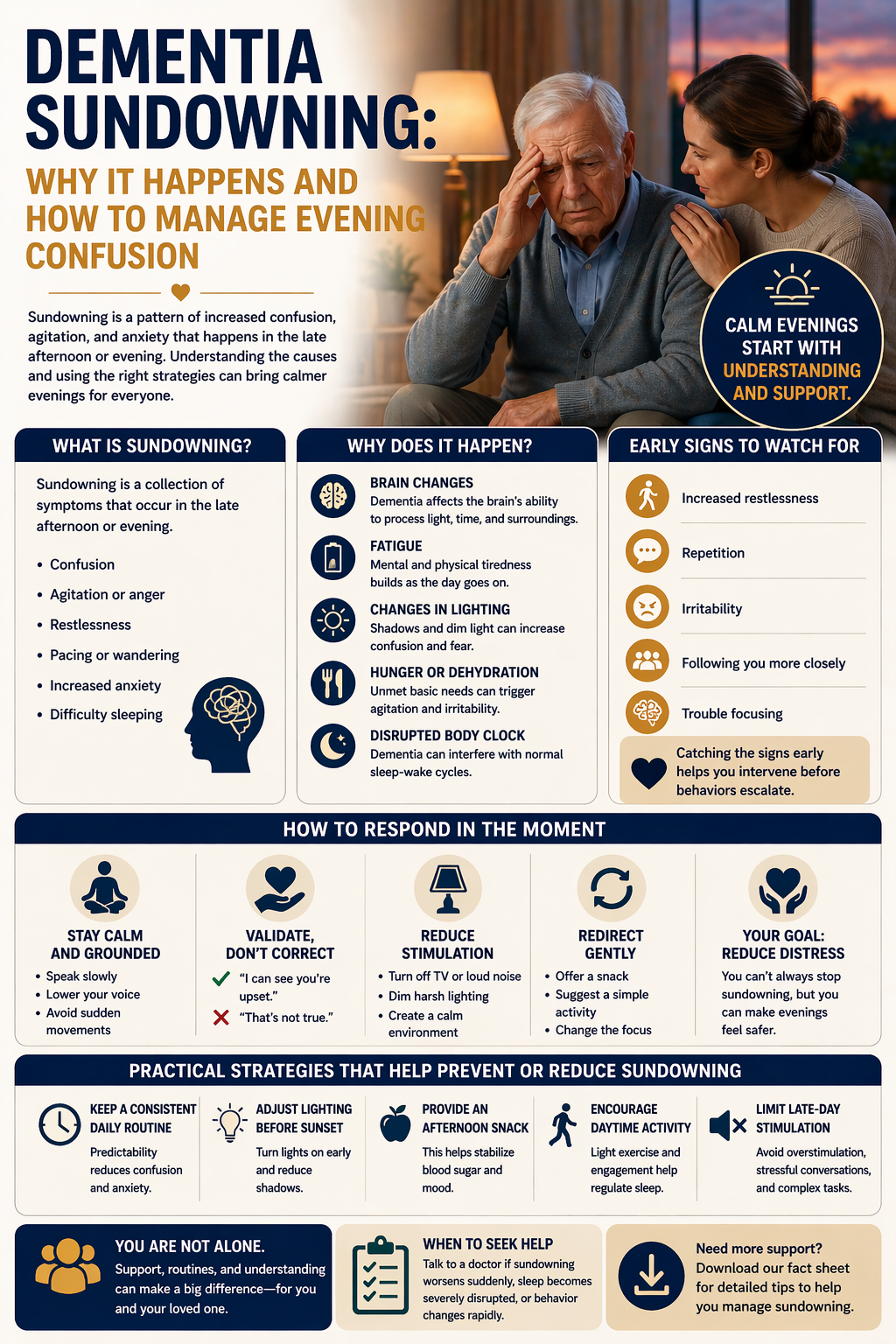
Dementia sundowning is a pattern of increased confusion, agitation, and anxiety that typically occurs in the late afternoon or evening—and for caregivers, it can be one of the most exhausting parts of the day.
If your loved one becomes more confused, restless, or upset as the day goes on, you are not imagining it.
This is a common and challenging part of dementia.
But there are ways to manage it.
What Is Sundowning in Dementia?
Sundowning refers to a group of symptoms that appear later in the day, including:
- Confusion
- Agitation or anger
- Restlessness
- Pacing or wandering
- Increased anxiety
- Difficulty sleeping
These behaviors often follow a pattern—and understanding that pattern is key.
Why Sundowning Happens
There is no single cause, but several factors contribute:
🧠 Brain Changes
Dementia affects the brain’s ability to interpret light, time, and surroundings.
🟡 Fatigue
As the day progresses, mental and physical exhaustion builds.
🌗 Changes in Lighting
Shadows and dim light can increase confusion and fear.
🍽 Hunger or Dehydration
Basic needs that go unmet can trigger agitation.
🔄 Disrupted Body Clock
Dementia often disrupts normal sleep-wake cycles.
Early Signs Sundowning Is Starting
Recognizing early signals helps you intervene before behaviors escalate.
Watch for:
- Increased restlessness
- Repetition
- Irritability
- Following you more closely
- Trouble focusing
👉 This is your window to act early.
How to Respond in the Moment (Without Escalating)
A calm, person-centered approach works best.
✔ Stay Calm and Grounded
Your tone matters more than your words.
- Speak slowly
- Lower your voice
- Avoid sudden movements
✔ Validate, Don’t Correct
Even if what they say is not accurate, the feeling is real.
✔ “I can see you’re upset.”
❌ “That’s not true.”
✔ Reduce Stimulation
- Turn off TV or loud noise
- Dim harsh lighting (but keep rooms well-lit)
- Create a calm environment
✔ Redirect Gently
- Offer a snack
- Suggest a simple activity
- Change the focus
👉 The goal is not to fix the behavior
👉 The goal is to reduce distress
Practical Strategies That Reduce Sundowning
✔ Keep a Consistent Daily Routine
Predictability reduces confusion.
👉 See: Daily Caregiving Routines That Prevent Burnout (Step-by-Step Guide)
✔ Adjust Lighting Before Sunset
- Turn lights on early
- Reduce shadows
✔ Provide an Afternoon Snack
Low blood sugar can increase agitation.
✔ Encourage Daytime Activity
- Light exercise
- Structured activities
This helps regulate sleep.
✔ Limit Late-Day Stimulation
Avoid:
- Large gatherings
- Complex tasks
- Over-scheduling
How Sundowning Connects to Other Behaviors
Sundowning often overlaps with:
- Wandering
- Agitation or aggression
- Sleep disturbances
👉 Related: Dementia Wandering: How to Keep Your Loved One Safe Without Constant Fear
How to Handle Dementia Aggression and Anger Safely (Caregiver Guide)
When to Talk to a Doctor
Consult a healthcare provider if:
- Sundowning worsens suddenly
- Sleep becomes severely disrupted
- Behavior changes rapidly
Underlying medical issues (like infections or medication side effects) may be involved.
Protecting Yourself From Burnout
Evening hours can become the most stressful part of caregiving.
You may feel:
- Exhausted
- Frustrated
- Overwhelmed
You need support.
👉 See: How to Care for Someone With Dementia Without Burning Out (Step-by-Step Guide)
Final Thoughts
Sundowning is not random—it is a predictable pattern linked to brain changes, fatigue, and environmental triggers.
When you understand what is happening and respond with calm, structured strategies, you can reduce stress for both you and your loved one.
You are not alone in this.
Because caregiving should not cost you your health.
- Dementia Caregiver Help: Why Dementia Behaviors Happen and How to Respond Without Burnout
- How to Care for Someone With Dementia Without Burning Out (Step-by-Step Guide)
- Daily Caregiving Routines That Prevent Burnout (Step-by-Step Guide)
- Caregiver Burnout: Signs, Symptoms, and How to Recover
- When to Walk Away from Caregiving (And How to Do It Safely)
- How to Safely Transfer a Patient at Home Without Injury (Caregiver Guide)
- How to Handle Dementia Aggression and Anger Safely (Caregiver Guide)
- Dementia Sundowning: Why It Happens and How to Manage Evening Confusion
- Dementia Caregiver Survival Guide : What No One Tells You
- 10 Early Signs of Dementia: Caregiver Guide
- Dementia Wandering:How to Keep Your Loved One Safe
- What Stage of Dementia is This? A Caregiver's Guide to Progression
- When is it Time For Memory Care?
Frequently Asked Questions
What time does sundowning usually start?
It typically begins in the late afternoon or early evening as fatigue increases.
Why does sundowning happen in dementia?
It is caused by brain changes, fatigue, and environmental factors like lighting and routine disruptions.
How can I calm someone during sundowning?
Stay calm, validate feelings, reduce stimulation, and gently redirect attention.
Can sundowning be prevented?
It can often be reduced by maintaining routines, improving lighting, and managing triggers.