What Documents Do You Need Before a Medical Emergency?
Don’t wait for a crisis. Learn what documents caregivers need before a medical emergency to protect your loved one and avoid delays in care.

Why Every Caregiver Needs to Be Prepared Before a Crisis Happens
Many caregivers search for what documents are needed before a medical emergency because they are suddenly expected to make decisions without the right information.
Most families don’t think about important documents—until it’s too late.
A medical emergency happens.
And suddenly, you are asked:
- “Do you have power of attorney?”
- “What medications are they taking?”
- “Who is their doctor?”
👉 And you don’t have the answers easily available.
Many caregivers search for what documents are needed before a medical emergency—but don’t realize how critical preparation is until they are in the middle of a crisis.
What Happens When You’re Not Prepared
Without the right documents:
- Care may be delayed
- Medical decisions may be restricted
- Stress increases dramatically
👉 In some cases, you may not even be allowed to make decisions for your loved one.
👉 Learn more:
What Happens If You Don’t Have Power of Attorney?
The Essential Caregiver Emergency Documents Checklist
These are the most important documents every caregiver should have ready and accessible.
1. Medical Information
- Current diagnoses
- Medication list (names, dosages, schedule)
- Allergies
- Physician and specialist contact information
- Insurance details
👉 This is often the first information healthcare providers need.
2. Legal Documents
- Power of Attorney (POA)
- Healthcare proxy / medical power of attorney
- Living will / advance directives
- HIPAA authorization
👉 These documents determine who can make decisions.
3. Insurance and Financial Information
- Medicare and insurance cards
- Prescription coverage
- Long-term care insurance
- Billing and payment information
4. Emergency Contacts
- Family members
- Care providers
- Physicians
- Pharmacy
👉 Keep this updated and easy to access.
5. Person-Centered Care Profile (ESSENTIAL)
Personal preferences and routines
👉 This ensures care is personalized—not just medical
- Communication needs
- Behavioral or emotional triggers
- Mobility and functional abilities
- Cultural or spiritual preferences
- Comfort measures
6. Hospital and Discharge Information
- Recent hospitalizations
- Discharge summaries
- Follow-up care instructions
👉 Learn what to do after discharge:
What to Do After a Hospital Discharge
Why Organization Matters
In an emergency:
👉 You do not have time to search for documents.
Everything should be:
- Organized
- Updated
- Accessible
Where to Store These Documents: The Importance of a Crisis Packet
Having the right documents is only part of the solution.
In an emergency, seconds matter—and organization can directly impact the quality and speed of care.
👉 Knowing where they are—and being able to access them quickly—is just as important.
Many families struggle because documents are:
- Scattered
- Outdated
- Difficult to find
The Solution: A Crisis Packet
A Crisis Packet is a centralized system that keeps your most important documents:
- Organized
- Protected
- Ready to go in an emergency
Why This Matters
In a crisis:
- Emergency responders may arrive at your home
- You may need to leave quickly for the hospital
- Critical decisions may need to be made immediately
👉 You do not have time to search.
What Makes a Crisis Packet Different
Your most important documents should be stored in:
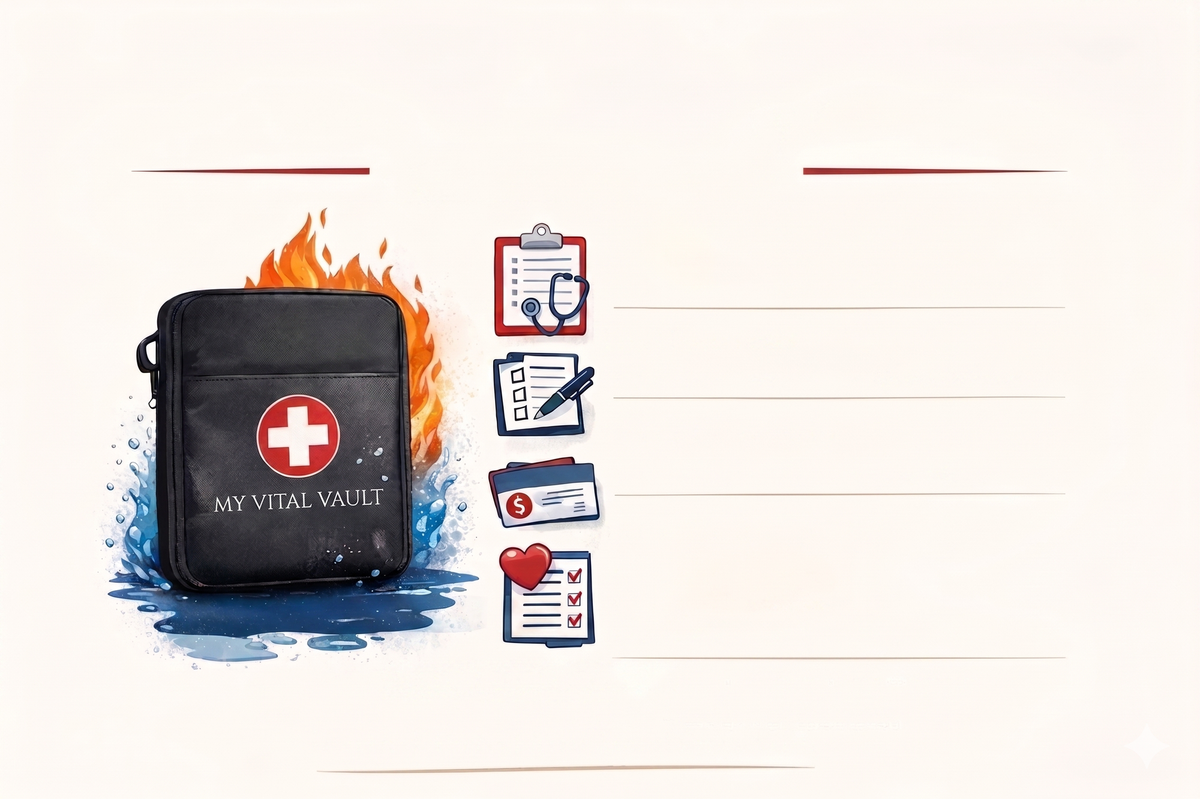
👉 A fireproof and waterproof document protector
This ensures they are:
- Protected from damage
- Easy to grab quickly
- Available when needed
👉 This is exactly what the My Vital Vault Emergency System is designed for:
Critical Documents That Should Be Included
In addition to standard medical and legal information, your Crisis Packet should include:
🩺 Medical & Care Information
- Medication list
- Diagnoses
- Physician contacts
- Insurance information
⚖️ Legal Documents
- Power of Attorney
- Healthcare proxy
- Advance directives
- HIPAA authorization
🧾 Financial & Insurance Documents
- Medicare and insurance cards
- Long-term care insurance
- Billing and payment details
❤️ End-of-Life and Personal Wishes (Often Overlooked)
These are some of the most important—and most often missing—documents:
- POLST (Physician Orders for Life-Sustaining Treatment)
- Organ donation documentation
- Body donation to science paperwork
- Funeral or burial arrangements
- Written personal care preferences
👉 These documents ensure:
- Your wishes are honored
- Families are not left guessing
- Care decisions are made quickly and respectfully
Why This Matters for Families
Without these documents:
- Care may not reflect your wishes
- Families may experience confusion or conflict
- Critical decisions may be delayed
👉 With them, everything becomes clearer and more manageable.
A Simple but Powerful Step
Keep your Crisis Packet:
- Near the front door
- In a clearly known location
- Accessible to trusted family members
👉 And make sure others know where it is.
Common Mistakes Caregivers Make
- Not having POA in place
- Not updating medication lists
- Keeping documents in multiple locations
- Not sharing access with family
- Waiting until a crisis happens
👉 These mistakes can create serious problems during emergencies.
What Caregivers Should Do Now
Step 1:
Gather important documents
Step 2:
Organize them in one place
Step 3:
Use a fireproof, waterproof storage system
Step 4:
Share access with trusted individuals
👉 If you need help organizing:
Frequently Asked Questions
What documents are most important in an emergency?
Medical information, legal documents, and insurance details.
Do I need a power of attorney before a crisis?
Yes. Without it, you may not be able to make decisions.
Where should I store these documents?
In a secure, centralized location—preferably a Crisis Packet system.
Should documents be digital or paper?
Both. Digital for access, paper for backup.
Final Thought
Being prepared is not just about organization.
👉 It is about protecting your wishes, your family, and your peace of mind.
Be Ready Before a Crisis Happens
Being prepared is not just about organization.
It is about protecting your loved one’s wishes, reducing stress, and making confident decisions during difficult moments.
👉 If caregiving is already overwhelming:
👉 Build a complete caregiving plan:
👉 Get started organizing today: