Beyond the Panic Button: The New Generation of Senior Safety Devices with Dot Boyd - Episode 114

Are you still picturing the old "I've fallen and I can't get up!" commercials when you think of senior safety? It's time for an upgrade! In this eye-opening episode of the Caregiver Relief Podcast, host Diane Carbo is joined by Dot Boyd, a caregiver-turned-advocate whose personal journey with her mother, Judy, sparked a passion for modern senior safety.
Dot shares her powerful story and dives into the next generation of safety devices that go far beyond the simple panic button. This episode is packed with practical advice, shocking statistics, and heartfelt insights that every caregiver needs to hear. Discover how personalized tools and a strong support network can empower seniors to live safely, maintain their dignity, and stay independent in the homes they love. ❤️
Ready to feel more prepared and less worried? This conversation is your first step.
What You'll Learn in This Episode:
Here’s a look at the crucial topics Diane and Dot explore:
- Dot's Personal Journey 👩👧: Hear the story of Dot's mother, Judy, whose serious fall transformed Dot from a family caregiver into a passionate advocate for senior safety and fall prevention.
- The Shocking Reality of Falls 📊:
- Falls are the #1 "independence robber" for seniors.
- Every 11 seconds, an older adult is treated in an emergency room for a fall.
- Every 19 minutes, a senior dies from fall-related injuries.
- The average time a person who has fallen waits for help is nearly 18 hours.
- Moving Beyond the Panic Button 🚀: Learn about key advancements in modern safety devices, including options for at-home use, on-the-go protection, and integrated systems that work everywhere.
- Finding the Right Fit 🤔: Dot explains her consultation process, where she asks key questions about lifestyle, health conditions, and specific family concerns to recommend the best safety tools for each unique situation.
- Hidden Hazards in the Home 🏡: Discover common, often-overlooked risks in a senior's home, from poor lighting and throw rugs to low toilet seats, and simple solutions to fix them.
- Building Your "Team Judy" 🤝: Learn about Dot's concept of "Team Judy," a support network of professionals and loved ones essential for navigating the aging process. As Dot says, "Aging safely is a team sport".
- Overcoming Technology Fears 📱: Dot shares how modern devices are designed for simplicity. For the user, it’s often just a push of a button, while family members can utilize features like mobile apps for peace of mind.
- How to Start the Conversation 💬: Get crucial advice on how to talk to a resistant parent about safety without making them feel old or controlled. Hint: It starts with their goals, not your fears.
Meet Our Guest: Dot Boyd
Dot Boyd is a Certified Matter of Balance Coach and a leader in fall prevention who founded Dot for Senior Safety. Her mission is to help families avoid the crisis she experienced by providing modern, reliable safety solutions and expert guidance.
- Website: dotforseniorsafety.com

Memorable Quotes from the Episode
"Falls are the number one independence robber of seniors. They don't know that one fall can actually put them in... never to be able to return to their home." - Diane Carbo
"I'd rather look old than look dead or be dead." - Dot Boyd, on encouraging seniors to use safety tools like canes
"Aging is a team sport. Aging safely is a team sport. And don't go it alone. And if you're a family caregiver and you're trying to shoulder it all, you're gonna fall apart first." - Dot Boyd
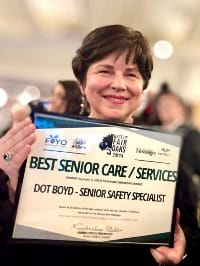
This episode is a must-listen for anyone caring for an aging loved one. Tune in to gain confidence, discover new solutions, and learn how to protect the people who matter most. 🙏
Podcast Episode Transcript
Diane: Welcome to the Caregiver Relief Podcast, where we shine a light on tools, stories, and innovations, making a difference in the lives of family caregivers and their loved ones. I'm your host Diane Carbo, a registered nurse with over 50 years of experience supporting families through the aging process.
Diane: Today I'm joined by someone whose story and mission will truly resonate with anyone caring for an aging parent or a loved one do. Boyd is a caregiver turned advocate who transformed her personal experience into a passion for keeping seniors safe, dignified, and independent, where wherever they call home.
From helping her own mother after a serious fall to becoming a certified. A matter of balance coach and a respected leader in fall prevention DOT's journey is both inspiring and incredibly practical. In this episode, we'll talk about the next generation of safety, senior safety devices, moving far beyond the old panic buck button, and how personalized tools and support can make all the difference in the world thought.
I'm really excited to have you here today because it's such a timely topic. before we jump in, can you share a little bit about you, your mom, Judy, and how Carrie for her shaped the work you do today?
Dot: Absolutely. Thank you so much for having me on today, Diana, it's a pleasure to be here and to share my world of wisdom about senior safety and to,with your audience and just to share my passion.
I can hear the passion in your voice too, about this subject and about caregivers. I have a soft spot for family caregivers, and maybe if you've been one, you know it right? Yes. You know it, right? Oh, when you see it. yeah. So my mom, I call it, I talk about my team, Judy, my mom, Judy, after my dad passed away first, and my mom relied on my husband and me for the most part after that.
and more and more, especially after her big fall. so yeah, it was, and nobody, a lot of us don't sign up to be a caregiver really understanding what that means, right? Yes. What it entails. And we think we can do it. No big deal. And my mom cared for me. Of course I'm gonna care for her. but there's a lot more to it than that, right?
Yes. And yeah, so in my mom's case, yeah,she had some flaws. But we never had a conversation about it. I didn't know the first thing about senior safety. I truly didn't. And,but what I, what happened was we never had a conversation about it. And honestly, even if we had, my mom would've been very stubborn, like so many of us independent or trying to be independent people, no way. I'm fine. Leave me alone. And so what happened was, yeah, mom took a really bad fall when no one was home. And what happens, often for people is they have terrible injuries and they can't move to get to a phone. Yeah. So my mom was one of those sad, false statistics that, she couldn't go to a phone and she had to lay there on the floor until somebody came home miraculously.
Diane: That's a common story.
Dot: It
Diane: is a common
Dot: story.
Diane: I. I, I just wanted to point out that falls are the number one independence robber of seniors. They don't know that one fall can actually put them in, never to be able to return, put them in a nursing home, or never to be able to return to their home. So I think what you're doing is so important, and especially now as we have a silver tsunami, we need to be prepared for, to protect our seniors.
Dot: We really do. And you hit the nail on the head. falls are an epidemic for folks se 65 and older, and that's not even including younger people who have, may have some sort of, disability or anyone with a chronic disease that puts them at, at a higher risk of falling. But just for regular, everyday people, 65 and over is when they really started, I think because of Medicare age, started tracking this.
I know the statistics I have from pre pandemic are that every 11 seconds an older adult is treated in the emergency department for a fall, for fall removal. Oh, wow. Really? Every 11 seconds.
Diane: Every 11 seconds. Wow. That's astonishing.
Dot: It shocked me. And then I kept reading. This is when I really started to immerse myself in fall prevention awareness in the various, seminars as well as all of the national websites and a Stop Falls coalition in my area.
And I found out that every 19 minutes a senior dies from those fall related injuries.
Diane: every 19, oh, that's a statistic I was not familiar with either. So every 15 minutes,
Dot: every 19 minutes a senior dies from fall related injuries.
Diane: Wow.
Dot: Yeah. Yeah. And another thing that was shocking, and we'll probably talk about that later too, is that,because people are relying on a phone, we all think we're 25 again, right?
We're gonna, no problem. I fall, I need problem, I'm not gonna fall. But if I do, no big deal, I'll just, if I need help, I'll call. the average length of time someone goes without help is almost 18 hours. That's for people living alone who are, probably independent. Nobody's worried about 'em every minute of the day.
And, but if you can't get to a phone, like in my
Diane: mom's case, I can attest to that. Yes, I could tell you I've had, I've actually cared for seeing who not only laid there for 18 to 24 hours, they were a unable to move at all. So they actually stopped the circulation to their body and they actually had necrosis or dead skin that, it was the pressure sores.
All over, like wherever they were laid on. And it's devastating and you, it's hard to overcome that. So that's why I'm such an advocate and I'm so excited about this conversation because people take their independence for granted. and I have to ask you, what was your turning point that made you realize that there had to be better safety solutions for seniors living at home?
Dot: it sure wasn't what I was caring for my mom, because, because then I, maybe I would've had a conversation with her about the topic. After she came home from six weeks of rehab after surgery and all of that. We still didn't have that conversation. What happened though, is mom lost more and more of her independence.
We cared for her after my dad passed away, Uhhuh and I lost my independence too. So what? I think my mom was lucky. She bounced back. She was lucky. It was four hours, not 18 hours or three days. Like some people, but what people don't realize too is that because we're stubborn, then we're putting more, and we don't wanna be a burden on anyone, but we're putting more of a burden on our loved ones because now we're worried all the time, what's gonna happen to mom?
I'm not there. I can't be there. Yep. And it's gonna happen again. Yes. Most likely. If someone's fallen, it's gonna happen again. Yeah. And but people don't know that, don't have to have the know how to have the conversation. So in our case, we didn't have a conversation. And so it was at some point though, it was, it was a nurse who said to me, maybe have you thought about, moving your mom into a care home?
Which oh my gosh, right? oh, bad daughter alert. And oh yeah, okay, there's somebody talking to me about something that they see, right? So at the hospital after one of mom's issues. the turning point really for me was because I went on this journey with my mom, I thought to myself one day I would love to be in this senior care professional group, right?
In the industry, so to speak, for lack of a better term. But I knew I wasn't gonna, Midlife and get credentialed in any particular way. Go back to school for years. And I knew people who had all of these initials after their name, and I'm like, I don't even know what that stands for, but I'm sure there's a lot of fun involved.
The
Diane: ABCs after the name, there's mile long list of ABCs after somebody's name, and I'm going, oh my God. I don't know what that means, but I guess they must be really smart. Yeah,
Dot: They're dedicated. So I'm like, that's not me at this, at that point in my life, and so I thought one day, I would love to, to help families and help seniors.
Yeah. because I've experienced it, which is the case for many people. Yes. in senior services, hands go up if I'm in a room of my pro professional peers and I say, how many Were a family caregiver? Oh, at least half the room. So the turning point tends to be when we're being, we've been a caregiver, so for me it was someday I'd like to help.
And then luckily for me, a friend, approached me some years later and who had been an investor in what, in electronic caregiver devices and said, I know you and your mom's story. You should take a look at this and that. So that was my avenue in because with training and immersion and an understanding of what families go through, I didn't need to be credentialed.
I live it, I learn it, and, and that, that was it. So for me, so I, I get to help others, maybe avoid some of the same faith that we had.
Diane: I'm finding most people that I interview that have gotten involved with creating products or services were caregivers taking care. the baby boomers have been caring, are getting cared for, and I'm a baby boomer and I have people that are taking care of a hundred year old parents.
yes, I know. It's incredible. so I, I just really think that what we're doing is we're gonna make it easier for the future generations because we're gonna have solutions to so many problems.
Dot: I think so. And I think the boomer generation is demanding, better solutions, right? Yes. More modern innovations.
They still need to be easy to use, they need to be, yeah. Beyond the panic button, like
Diane: Exactly.
Dot: I love this, podcast today. Yeah, definitely.
Diane: So many people still think the old school I've fallen and I can't get up panic button when they think about falls. So what are some key advancements in senior safety devices today?
Dot: I, it's such a great thing because the minute I say what I do, oh yeah. You mean like I've fallen and I can't get up? Yeah. and it's unfortunately decades of that commercial. And those ads have put such a stigma on aging and on, on the need for tools and using any kind of tools. And there's this feeling of, oh, that's, I'm gonna look like an old lady.
I'm not, I'm no, I'm not having that.
Diane: Or I'm not, I hear it all the time. Yes. They don't wanna wear hearing aids because it makes them look old then that's leading to dementia. 'cause they're killing off their brain cells in their hearing when they're hearing They don't wanna wear walk with a cane or a walker or anything because it makes them look old.
I had a 90-year-old uncle who was still very independent and stuff. Went to a senior center, says, I'm not going back. They're all old people.
Dot: I know that's it. Okay. That's the crux of it right there, Diane. So yeah, we, whatever age we are, I don't know, just divide it into half that number and that's who we're inside.
Like our body might be aging, our mind might be aging, but our core person hasn't changed. So we're looking at the world like, don't tell me what to do. Yep. Don't tell me not to use that step stool. Don't tell me, to get rid of the ladders or don't tell me you know, this, that, or the other. And so there's a lot of pushback.
Diane: Yes. Really.
Dot: Because we don't wanna feel old the way, we don't want anyone telling us we're old, but I always say this because I give a lot of fall prevention seminars. And I talk about, using the tools that are available and we'll talk about those and also using them properly and getting fitted properly for certain things.
and I tell them that, because I did have, more than once, but I don't wanna use that cane. It makes me feel old, look old. And I'm like, I have finally started to say in a nice way, I'd rather look old than look dead or be dead.
My husband says I need to use my scary voice more. I don't, because people come to me often after the crisis and I give all these presentations and people are thinking, oh, that's not me. But my aunt, my aunt was on the floor for three days and she lived in a skilled nursing for a few weeks after that and died.
Oh yeah. My neighbor, I wish we checked in because we didn't realize it, but they had fallen and suffered and died and nobody knew it till a week later. And so you'll hear these things and people know this, but we're all this younger person inside, so that's happening to old people, not me. Yeah, exactly.
So that's the foundation of where we're, so thankfully, yeah, there are some better looking devices, more modern, devices that do more, that are still really important to use and very simple. there's device. I think it's really important when people have to look at a safety device.
Is it for use at home? Is it for use away from home? Or do I need something that works at home and on the go? That's important to know what's my lifestyle, when am I most concerned about my safety or when my kids hounding me about their worries, about my safety? Yeah. And that's kind of part of the basis for what to look for and what fits.
Diane: So how do you help families decide which devices or safety tools are best for their loved one?
Dot: Yeah. I ask a lot of questions because I wanna know, okay, if I'm, sometimes I'm working with adult children. And often, more often than not, it's daughters and daughters-in-law, right? Yep.
Caregivers, we know who the bulk of caregivers are. Yeah. And, but sometimes it's a son and, but nevertheless, many times it's a worried adult child. So I'm asking them questions about what's, what are your concerns? When are you most concerned about your mom or your dad's safety? Is it at home?
Is it on the go? Is it both? do they live alone? I ask questions about what are their health conditions, right? Have they fallen? Do they have a fall history? all of these kinds of things. yeah. do they have a pacemaker or maybe a deep brain stimulator like a lot of folks with Parkinson's have.
Yeah. There's various things. Do they have, peripheral neuropathy, whatnot. So all of these kinds of things to know so that I can have a better understanding of. Help. And then I ask, what's their daily life like? Are they Mobile, going active, doing things, leaving the house alone. And so I get a lot of answers that way so I can help decide and help a family decide what device makes the most sense to address their concerns.
And if I'm working directly with the senior, the client who's going to make decisions on his or her own, I ask really a lot of the same questions. And what are their goals? is your goal to stay in the home you love? This aging in place idea, which is what most people wanna do.
Diane: Yep. Yep.
They want to stay home, but they don't wanna take the, they don't want any kind of safety equipment that makes them think that they can't stay home. they're, they fight against themselves because they, their, it impacts their vision or their image of themselves is what I wanna say.
Dot: Because it's that younger self thinking, I'm fine.
Everybody leave me alone. Why are my kids driving me nuts? And I tell them, they love you. First of all. You got a helicopter of kids. It's because they love you and they're worried about you. And I tell them, have reason to be worried. Yeah. Because you, you wanna be using the tools to help you be safe and you wanna be able to get help right away, not hours or days later.
Yes. I wish you could go on the road with me, Diane. Because I did have a nurse sit in on my presentation a few years ago and she says, dot, you need to tell everybody about pressure sores and when they're laying there on the ground, and sorry, but you have to urinate on yourself at some point, right?
And you thought, now you may have open wounds that have to heal and you didn't, you didn't get help for a stroke in that golden hour. All of these things that. Impact our comeback and our independence. And nurses know this better than anyone.
Diane: Yeah, I'm just, I just was astonished. Yesterday I have a client that's in a nursing home and he's developed pressure sores and I was like, he's diabetic.
His pressure sores on his heels and his butt and they're sending him home soon. And I, I'm an old rehab nurse, so you know, you turn them every two hours, whatever. The new philosophy that has been going on the last few years is if the patient doesn't wanna turn and then you can leave them. Oh my gosh.
and I'm like,I'm gonna write a letter to somebody because I just think this is astonishing. And I'm talking to other care managers are saying they're seeing it too. That's laziness on the facilities part. And the other thing is they don't understand that cubitus and or a pressure sore can cost at the minimum a hundred thousand dollars, to treat it over a period of time.
that just,I'm scared for our healthcare system right now. That's why it's so important. We need people like you out there educating people. So can you walk us through what a typical safety consultation would look like?
Dot: So sometimes I'm only over the phone. Sometimes I'm via Zoom or FaceTime, and other times I'm in someone's home, Uhhuh.
And primarily there I've been called in, because there's concern over safety or there's been a fall or some other incident and someone says, oh, you need to know dot, dot for senior safety because she'll come in and let show you what there is. So I don't do the full blown run, go through the house and check for everything uhhuh.
There are people certified to do that. and they will do that for us. Are you
Diane: still finding that the, that No. It used to be and the, in at least 20, 15, 20 years ago, where you could call your, home your doctor and say, Hey, can you have home care come out and do a home safety valve for us?
Does that still work?
Dot: Do you know? I think it depends on your insurance and your relationship with your doctor and how good of an advocate you're, so home health is supposed to do that when they come out?
Diane: Yes.
Dot: So if you've been prescribed home health, that is part of their assessment
Diane: to make sure that they're not doing it.
I can tell you right now. no, they're not.
Dot: I would say that they're not, doing it or your phone and my phone would be ringing off the hook even more. Yeah. Because there's so many needs. And what I find is, and I went through this with my mom and I hear it all the time, is, okay, mom was in the hospital and it could have been for a urinary tract infection.
That also risks, increases a person's risk of falling because you get disoriented and delirious in my mom's case, and you can have sepsis and it can be a huge nightmare. So mom would go through this process, go to the hospital, and then they would call and say, okay, we're sending your mom home today.
Oh my gosh, right? No warning today at 11. Mom's being discharged. They call me at nine and I'm supposed to make sure I've got everything ready for mom to come home. What the heck do I know? even including, caring for wounds, right? Yeah. And right. A home health nurse is gonna come out and show us what to do, and they're like, oh my gosh, mom's life's in my hands.
What do I know? and I have to look all I'm all confident know what I'm doing for mom. So what doing there? Doing there? Not so anyway,so people get discharged and there's not a plan in place, a complete plan for what care looks like at home. So yes, the safety eval, and as, as well as, What else is going on in the home? Is it safe in, is it a house that, that it looks like it has hoarding in it and people become overwhelmed with taking care of the interior of the home, for instance. Yeah. And that makes it unsafe. Yeah. Are there safety bars in the shower and around the toilet, around?
there might need to be rails down a long hallway. Things, people like that. People don't think about that. I would say that some of it's common sense look around, but kids are in such panic mode. They wanna put bubble wrap around their parents the way they wanna put it around their children.
There's always pushback. Yeah. I wish I could put every
Diane: senior in bubble wrap.
Dot: I know. Tell me. There are days where I need
Diane: bubble wrap. I'm a fall risk. You know what,I am a fall risk at 72 and I walk and I'm active, but I have chronic pain and there's just days where I just, my balance isn't as good.
And I'm like, I've started to do, Tai chi and yoga or whatever I can do to keep it going. But, it's absolutely something that I'm well aware of because I don't wanna fall and can't get up and then be stuck there for days. 'cause I know I, all I have is my phone right now.
Yeah. but, I'm still healthy and I've got good lungs.
Dot: You think you can yell. I, and I tell clients too, because I've had, I've heard stories. People who live in assisted living or independent living community. And they're all in apartments. Oh, I just bang on the wall or I'll holler out.
Yeah. but if you're, if you've just fallen and you had the wind knocked outta you and you're in pain. Yep. You've just got a whimper coming out. Can't do it.
Diane: yep. Can't do it. We think of the easiest scenario. We don't consider the worst case scenario.
Dot: yes. And I need to talk, I'm the worst case scenario lady, but I'm also the person with solutions.
So at least it's not worst case scenario. And, sorry, you're stuck, right?
Diane: Yeah. Yeah. so what are some common risks or hazards in seniors home that often go unnoticed?
Dot: I,I think I have a home safety checklist, at my website. Just a brief one. And, but there you can also go to the national websites for things.
And this is full prevention awareness month. So it's perfect timing. sometimes it's as simple as lighting. Oh my gosh, I've been to so many homes and someone has the curtains closed, the lights off. I'm like, no, this is depressing. Not good for your mental health, but you sure as heck can't see where you're walking either.
Yes.
Diane: Yes.
Dot: And with visual changes as we age, we need bright lights.
Diane: Yep.
Dot: We need it. So sometimes it's lighting and I even, I carry around these little motion sensor lights that, that my husband found. They just plug in and they come on for 30 seconds. Seconds. I love them. Yeah. Yeah. We have 'em all over the house because people won't turn on a light when they get up to go to the bathroom in the middle of the night.
No problem. But you walk by this little light and it goes on before you get there, and then you've got one in the hallway and one in the bathroom, and at least you can see something. So sometimes it's as simple as, a four pack of lights for 20 bucks.
Diane: Yep. I have a funny story to tell you. My, during COVID, my son opened a ketamine clinic in New Hampshire and he was having a hard time finding a nurse.
So I drove up to New Hampshire and I rented a room in this million dollar home. It, he was renting out rooms to everybody. He, this gentleman that rented to me, lovely man, in his, mid forties, early fifties. And I started putting, nightlights around the, 'cause the hallway's dark, my room was at the end of the hall and I had a long hallway to get to the bathroom.
And so I put night lights in the bathroom, and I'll never forget this, he was shocked. He came home one day and he took them all out. Oh my gosh. What did they, you I go up to, excuse me, John. I said, I'm an old, for God's sake, I need light. Don't be taking those things out. and it bothered him and I said, put a, oh, they're not that bright.
Gimme a break. But it bothered him. And it's I actually. I actually bought a light because when I would come home late at night and in New Hampshire winter, it's cold and it's dark, and I actually bought a light that I could put that, I put a, I bought it myself and had, somebody install it so that when I came to the front door where there were several steps it would turn on and he was like, what did you do that for?
I said, I did tell him I was doing it because why do you need that? I said, because I can't see, and to walk from the street where I park to down a slippery driveway and a walk away and up some steps is concerning to me. So at least if I have this, it's a motion light that I can 'cause The way the street was the he this the.
Top of the house was at street level. So when, as soon as I, a car pulled by, it would turn on. So it was perfect for me when I'd get out of the car. I had light until I got into the house. Yeah. And that little bit made a difference for me. But, you just have to educate people that you, what are they paid for?
Dot: That's the thing is and I, part of my conversations with people too, especially when I give my seminars, and I'm concerned that seniors won't go visit their adult kids anymore. And if they have to fly, it's a pain. But a lot of people are still will willing to do that, right?
Yes. To get on a plane to go visit their loved one and see the grandkids. But when they stop going or they're, reluctant to go, it can be things as simple as. The toilet is too low in the guest bathroom. Yes. how to get on and off that toilet or the bed is too dang high. Yep. And right.
or whatever the steps. I can't get in the steps, the front door or the back door. There are things and because parents are trying not to make any waves Yep. They don't say anything to their adult kids. Look, it's gotten a little hard for us to come and visit you because Yes. Our mobility isn't what it used to be.
Yes. And you've got the stairs. Or,we need a little bit of help in the bathroom. We need some bars in the tub or a chair or something. Yeah. So I think those conversations are really important. But people don't know to have them. And then they're, if they do know that Exactly, how do I have them?
Yes. But I think our loved ones wanna see us generally. And so if that's all there is to a barrier, to a visit. Families will figure it out. Yep. and even the lifts for the toilet you can get, and they're not permanent. a lift or the bar are
Diane: simple to purchase. They're affordable and people don't think about it.
it's so funny 'cause I, when I'm in a home that has high toilet, I'm short, so it's comfortable for me. But I, and it's so funny 'cause I have, my knees are going now, I've got bone on, bone knees and, trying to avoid total knee replacements at this point in time. But when I'm on, all of a sudden I'm sitting down and I'm going way, I'm gonna fall down because it's so
Dot: low and I've forgotten.
But public toilets are way too low. Oh my God. Yes. All to be changed out. I'll tell you a story that is pretty horrific. I met a gentleman about five years ago and he told me that when he was in, he was about 55 years old, his knees gave out on him getting off the toilet. Uhhuh, he, he was on the heavy side, but he had knee trouble, which is very calm, and he fell and he got wedged between the toilet
Diane: and the top.
Oh, I've heard this before.
Dot: yes. That is a commonplace. People get all like a pretzel in there, wedge in their camp, move in pain, cracked ribs, maybe a broken Oh, it's awful. Yeah. He was not even in the age group yet of 65 and older. Exactly. He told me, and I was shocked when he told me this. Do you know how many days he, he was alive and wedged in there before somebody found him?
I have no idea. I know five days. Now, most people would not live through that.
Diane: No,
Dot: but because he was young. Yeah. And he, lucky enough, it was still a tub, not a shower. And he was able to reach, even in agony, he was able to reach over to the faucet and drink
Diane: water uhhuh. That was the only
Dot: thing that saved him.
Because five days without water is pretty rough, right?
yes. And another thing that we, that people forget about, again, we're thinking we're our younger selves and we're fine.
Diane: Yes.
Dot: But if we're on medications, so while we're laying there, we're on medications, we can't take our meds, we're not getting our fluids.
And if you care more about your pets, they're not getting fed either, right? Yeah. Yeah. And so even if you don't care about yourself, and then of course this scary thing too is for the adult kids is the thing. Oh, because mom's stubborn. Yeah. When I come visit her tomorrow, on Wednesday mornings, Thursday morning, whatever day, it's, oh my God, am I gonna find her on the floor?
in a world of hurt or maybe not alive or that, or whoever. and so it's this worry, because the reality is we can do everything right. We can take all the balance classes and strength training. Yes. All of that. And we can still, fall over our cat or our dog. Yep. That's exactly, it happens. It happens. Yep. Or a neighbor's dog gets loose and knocks you over. why is that your fault, right?
Diane: Yep. It happens.
Dot: It happens. It happens. gosh, my mom fell next to me in the long hallway, going to visit my dad in ICU. We went next to each other on a Friday night. And I could see it happening.
There she was to the right hand. Nothing I could do about it. Down she went and boy did she bang up her knee. She was, 84 at that point. Oh God. And it was awful. And so we spent the evening and x-ray and doing all that and told the nurse, tell dad we'll see him after a while, but there you go.
I'm right there. And I couldn't do anything for her. Yeah. so sometimes, it's a
Diane: helpless feeling. It's a helpless feeling. It's a
Dot: helpless feeling. Yeah. So there are things, there are steps people can take to use the pun steps,lighting and,putting even.
Don't lock the bathroom door because if emergency responders need to get to you yes. Who knows where the keys are. Simple stuff, right? Yes. Yeah. but lighting and handrails and even rails outside the back door, down into the steps to the garage or down the front, whatever, can help. And then, throw rugs.
We all know they're a disaster, right? and here's why I think people love rugs, right? They're cozy, they're pad whatever. Have you noticed, Diana? As we get older, we're not picking up our feet the way we used to when we were younger.
Diane: I actually, I have noticed that with me. I wear flip flops a lot because I'm in Myrtle Beach here and it's warm and, I have bunionettes, my feet are awful.
So I have and wearing flip flops. I don't have pain. if I would wear a regular shoe. I have, my feet are so wide, I can walk on water like a duck, So finding good, comfortable shoes is really hard for me. and I'm learning, I've noticed recently that every once in a while I'm like stuttering when I walk, Yeah. And when I said, oh my gosh, I gotta get some pt. I gotta do something to make sure I lift those feet up more.
Dot: I know, I find myself too. It's like I'm walking in slippers, right? shuffling along the, we call it the old person shuffle. So that gets us into trouble. That gets us into trouble.
Just like when we go from hardwood floor to carbon. There's a little threshold there, or just a little, tiny bit of a change with the rug or anything. We're not lifting our feet up. So again, we have to be aware that, we may be thinking we're our younger selves, but our body's doing some other things that we wanna kind, my
Diane: body feels like it's a hundred, but my spirit feels like I'm still 16.
I wanna be young and I'm just not. Now you're a certified coach for a matter of balance. Can you talk to us about how that program works and how does prop fall prevention tie into overall senior independence and dignity?
Dot: Oh yeah. So that class and it came outta, Maine Health out of the state of Maine.
And it is evidence-based. It's one of many, I think evidence-based falls, fall prevention classes. There's others, both sides. Another one, there's, in my area there's something called,live and Strong, I think something like that. So there's a lot of things like that. So the matter of balance, class, it's eight two hour sessions, so it's a pretty big commitment, Uhhuh, and it's meant to be discussions with peers.
So it's designed to be 12 to 14 seniors together, in the classroom. and to learn, first of all, to recognize that they have any fear of falling because many people who have fallen have a fear of falling now. And so what they do is they limit their activity, they limit their lives. Which also increases their risk of falling.
'cause they're isolated, they're not moving as much. It also impacts their mental health and all that. so a lot of the discussion is around that. Some great videos in the class that are, that have been, produced, with interviewing seniors and before and after they took the class. And, then there's, exercises that are really great.
and we can talk about those too when we talk about the virtual caregiver in another podcast because some of those exercises are there. That's
Diane: next exercise. That's your next podcast. Yes. With me. Yeah. I'm excited about that one too. I really am because you're helping us overcome, our aging, and helping us age gracefully.
If we to
Dot: Yeah. Because most of us, wanna live a quality life, how many, every years we have left. Yeah. And, but we need to know, how to be smart about it, And what tools are out there and what are the basic things we need to do daily. so yeah. So that class is really great because it's designed to give people a sense of confidence again, to be able to enjoy their lives and, and then to stick with those balance exercises, daily.
That's so important. Yeah. Really
Diane: is you've helped so many families create what you call the team. Judy, could you tell us more about that and how they this support network works and why it's essential.
Dot: Yeah. So when I was caring for mom and every time I'd find some kind person out there who would gimme a nugget of direction of help or something, Uhhuh, I was like, oh, they're on my team. Judy. I just came, I got my team, Judy, and it was a very small team. I had no idea what I was doing. But they were still people who were helping me, helping me understand the aging process or understanding,what mom's symptoms mean or where we're going here.
Yeah. yeah, and for me, I had nurses. Nurses were, nurses still are my heroes. Nurses were my heroes during that time period because they more than doctors Yes. Were the ones who would tell me like, it is Right. Tell me. Like it's, they say, and it wasn't always easy to hear.
Yes. But there was them and their ability to. Get past any kind of stereotypes and things. So they were wonderful. And and then I had a placement agent once, one of those nurses said, you really need to think about, maybe you wanna be your mom's daughter, not her caregiver. what does that, right.
What a concept. Yeah. so then I found, found a placement agent so that when, if we were gonna talk about moving mom, I didn't have to figure it all out by myself. That was important. so I'm well beyond that now. So when I meet with families, and this is a re these are resources that in your own community. That I'm networked in my community and then my community of different professionals, they may know someone in another area, another state. another county, another, city where then I can help somebody find their own team, Judy, of people they need because, you can't go alone. I always say aging is a team sport.
Aging safely is a team sport. Yes. And don't go it alone. And if you're a family caregiver and you're trying to shoulder it all,
Diane: yes.
Dot: you're gonna fall apart first. I don't care how old you are. Yeah,
Diane: exactly.
Dot: Yeah,
Diane: I,I'm laughing at you talking about this because,we don't wanna,look at ourselves as aging at all.
like you said, I always think of the meme where you have this little lady with a cane and her hair bun up looking in the mirror and she sees a ballerina. 'cause that would so be me.
Dot: I know. and lemme just say this to the younger generation trying to talk to your parents.
Yeah. Okay. Let's say they're in their minds. They're, 30, 40, whatever, and you're their daughter or son. They're looking at you like you're 12 or 16. So what the heck do you know? And why are you an expert and why are you telling them what to do? Don't change that much. The roles change, but the attitudes, the feelings, the attitude sucks and it's fair.
Yeah. Yeah. So that's part of, that's part of the, that's part of the issue.
Diane: I just had lunch with an old roommate. She's in her mid eighties and she worked up until COVID, doing working give as a nurse, giving injections for, passport health, I think it was for immunizations to travel.
And she was, she's really declined since COVID 'cause she stopped working and she, her daughter got her, I've fallen in, I can't get up button to know. She got it to appease her daughter. And then she sent it back when her daughter went on a cruise to, so that she'd know that she'd be protected. She sent it back the first day.
She didn't want anything to do with it. I'm like, oh my gosh. And here's an educated female, a nurse who just had heart surgery and foot surgery. And I'm like, what planet are you on? And while you call about Teen Judy,I push a, a, a. Encourage people to, to create a care team, partner support group.
Yes. And I actually, before she left, 'cause I know my old roommate very well. I said to her daughter, Peggy, you have to absolutely get people that we can call in case of an emergency. 'cause I know, and she had somebody, she set up a system where we all either took her to lunch or checked on her during the day.
She had people calling her all day long every day for the 10 days her daughter was gone. And, she probably got more activity and things that than she did if she was living at home with her daughter. But it was really important because I, she was, she's such a fall risk and she's starting to, touch a dementia and I just worry about her.
but she is stubborn Thickheaded. I am, I'm fine. I'm gonna go out. I'm just gonna go to sleep someday and I'm not gonna wake up. it, she knows it doesn't happen that way, but that's in her mind.
Dot: Okay. So I gotta tell you something. I love nurses and they're my heroes, but nurses are the most stubborn.
So what you're telling me about her's no surprise, because I have clients who are retired nurses. Yes. And the pushback. The pushback. they gave their kids on getting one of my, I resembled
Diane: that remark.
Dot: Yeah. Because, you guys knew it all and you knew more than doctors in many cases.
And so you were, you have this sense of control. I think nurses have a sense of, I'm in control. I got it going on. I'm smart. Don't worry about me. But
Diane: we all know absolutely right. And, they, it is hard to, it's a personal growth experience to accept help. And when you've been a caregiver all your life and people have come to you for help and support, all of a sudden you're in a role where you need help.
It's a very unfamiliar and uncomfortable role for many of us. Yeah. it really is. I've seen it. I know so many nurses, I'm trying not to be that way, not gonna be successful. But I keep saying to myself, I'm, I have to be patient. I have to accept that this is my body now. 'cause I, my body's broken.
I have chronic pain all over from years of picking up men. I always teach about.
We didn't have the amount of equipment or we were never encouraged to use the equipment we had. And I did rehab, quads, paras, strokes, head injuries. I physically did pick up people and it's just my whole back is ruined, my shoulder, everything, my knees. And it's just from having a very active and, caring lifestyle.
yes. taking care of others. So it's really challenging. That's why I know what family caregivers are going through and that's why I worry about them. That's why I think what you're doing is so important because they need to protect their bodies too.
Dot: They do. And no one talks to them about that.
Nope. Do family caregivers get any training on how to turn, a pa their mom or their dad or to lift someone or to help them outta bed or outta their chair? No. Yes, we have trained on that. Yes. and I get it. Our healthcare system is at the brink. But families are given so much responsibility now for caring.
And maybe in the old days when multiple generations all lived together or nearby, but now you might have one adult child in town where mom and dad are. That was my case. Thankfully. I had my husband and my siblings, live out of town. So it was pretty much on me. That's, I dunno if you know the
Diane: statistic.
Yeah. The statistic is very grid for family caregivers. It's 63% become seriously ill or die before the person. They're caring for passes. And that's astonishing. And that's up 13% from 20 years ago. And with the changes in Medicare right now, they're sending people home and they're expecting family caregivers to provide care that was once provided from by healthcare professionals.
We're gonna see people dying. the caregivers being killed off before the, per the seniors because they're trying so hard. it's frightening. It's absolutely frightening to me.
Dot: it's frightening. and I've heard a statistic even, that it's as high as 68% of the time. So the number, who knows? But it's
Diane: enough.
Dot: It has to. And so they say that for, 68% of the time, if you're this similar age. Caregiver like you and your spouse, your partner, you're the care partner. so yeah, the numbers go up higher. And here's, and I have many clients or families who come to me like fit to be tied because dad is killing himself, taking care of mom or the other way around.
and no one, wants to give a, give an inch and get some help in the house or get some safety devices. the care partner can leave the house. what people all, and we can talk about the Gene Hackman story, which, his care partner was 30 years younger than him. the actor Gene Hackman, she was, so his wife was 65.
He was 95. Oh, there was no, yeah, there was no one checking in. Oh. And they lived, out on their, I think a ranch, I believe in, was it Arizona, New Mexico somewhere, in the mid, in the southwest. And she got H virus, got very sick. Oh, so she, she died and he was still alive in the home. She was his caregiver. Oh. And they were very private, he was a very famous actor. And so he, they think he was alive about 10 days. He had, heart disease and dementia, and so there he is. and pets and things. Yes. And so there was no, no team approach to this. And the belief is, I'm younger, I'm okay, I can care, I can care for my loved one on myself.
But when something happens to you, yeah. How can you, And if you're not caring for yourself. the other conversation I have with people is there's all this focus as the caregiver on the patient. Who I'm caring for, so I'm neglecting, which I did. I neglected my health, my own healthcare.
Diane: The majority of caregivers do, they do.
Dot: I walked away from my career for a while. I, my social life was in shambles 'cause I couldn't make commitments because I didn't know if I'd have another emergency with mom. I was like, maybe put me down is probably, but who knows? Yeah. So everything, falls on this caregiver. And what the caregiver doesn't also realize is that they need a safety device.
We could talk about the different devices, but they're out running errands. let's say you're caring for a loved one spouse or even a parent, but you live together and you're the one running around doing all the errands and maybe your loved one is bedbound at home. What if something happens to you when you're out and about?
Who's gonna know? No, you gotta have a plan. I talk about this all the time. You gotta have an emergency plan. It's also emergency preparedness month and, interesting. They go together, But, people don't think about that 'cause we're so focused on the person we're providing care for. Absolutely. We think we're not.
Diane: Yeah, exactly. Now technology can be so intimidating, not only for older adults, but their caregivers because a lot of us are older, caring for an older parent or they're, you're a parent with teenagers and an aging parent. But the technology, a lot of people, I was surprised a lot of younger people don't know get into technology either.
so how do you help seniors and their caregivers feel more comfortable using safety devices?
Dot: Yeah. Yeah. It's so interesting. I dunno, I don't even the word use the word technology because that's a four letter word, right? Oh, I don't do technology. And you know what? I'm far from a techie. Yeah.
And I love that I'm far from a techie, and I can use all of the devices that I represent because that tells you they're simple. Uhhuh. And I also love that, hey, there's customer support I can call with a question. and they never make me feel stupid. They're just patient and they speak in non lingo, which is important because remember we talked about all those initials after the, solid someone's credentials, right?
Same thing with customer support for any kind of technology services. Phones, whatnot. That's their world. And they're speaking another language like, hold on, slow it down. Speak to me like you're talking to your grandma. Yep. Be nice about it. But in, in the case of the customer support I work with, they get it.
And they're just wonderful, kind, patient people. And and that's what I love. So I think what I, again, it comes down to who am I talking to? Am I talking to an adult child or a senior? Although I've had seniors in their nineties who are online shopping, buying, oh, I know a few. Yes.
Yeah. whoa. Driving, I'm like, wow. I dunno what I'll be doing when I'm 94, but I don't think it's that. Yep. So people can surprise you. So I never prejudge, I never second guess, but I want, I wanna assure people that there are, there might be a lot of good things built into what they say the back end of a device or a system
Diane: That make it spectacular when you need it. But all it is a push of a button or maybe yelling out help depending on the device, but basically a push of a button. and then the process starts. So for the families, the younger generation loves anything with a mobile app. And the products I have all come with a mobile app.
Dot: And I always tell my seniors, look, you don't have to worry about the mobile app. I may not even tell 'em about it. Yeah. Because, if I'm working with the adult kids, I say, look, there's a mobile app here, and if your mom and dad are still driving and you're worried to death about that, you can see where they are on the mobile app.
And you don't have to tell if you don't, but you can see where they, their familiar.
If they didn't get home, then you can start worrying like, oh boy, we gotta figure out where are they? and, start that process. But it's information while the adult kids are at work. Yep. A lot of times they can peek at their cell phone and see, okay, mom's at the hairdresser up. that's normal.
Oh yeah. Dad's, hey, dad's at the donut shop.
but whatever. And he's diabetic. It's
Diane: not supposed to be eating donut.
Dot: I know, that's what I was thinking. that's why I always tell families these are the things they can do, but you decide among your family members, you know what's important.
But then if you are, you, if you're a family member, you're a daughter in, Minnesota and mom and dad are, in let's just say where you are, Myrtle Beach.
Diane: Yeah.
Dot: then they wanna be able to see something. and maybe they can help the local. Branch of the family by leaving medication reminders from these mobile apps to some of the devices, you can leave a medication reminder, if someone has to check blood pressure or other vitals that is all stored in the mobile app and family members can see it and say, oh, I'm concerned because a dad hasn't checked his blood pressure.
Or B oh dear, it's been high lately. We better talk about that. You see what I'm saying? So it's information without having cameras in the house. but it connects families. It's a connected care process with the modern devices. But again, if somebody needs help, all it is either a fall detection device goes off if they fail, or a push of a button.
All this other stuff doesn't matter to the wearer so much. Exactly. Other people can manage the other stuff if they wanna use it. Yeah.
Diane: Yeah. what's your biggest piece of advice for caregivers who are overwhelmed and don't know where to start when it comes to keeping their loved one safe at home?
Dot: Yeah, boy, the biggest piece of advice, there can always call me or email me or visit my website to get a sense of what I have, because I'll have an honest conversation with them. we'll figure out, what is their biggest worry. But I think what happens is, especially when it comes to safety devices, right?
I have devices that work at home on the go, both, and, vitals tracking and you name it. But people are overwhelmed and they're thinking, mom needs one of those. I fall and I can't get up buttons. Let's just say that's the, like an easy low hanging fruit. Yes. But then their mom doesn't want one, right?
Yep. And, so first of all. Realizing that the, don't tell your parents what to do. Don't start there. I'll tell you what not to do. Don't start being the expert on how they live their lives. Yes. 'cause from that point, you're just gonna get pushback.
Diane: Don't parent your parent. Don't do it. Don't.
Dot: Yeah. talk to an expert, talk to someone who could maybe do, give some guidance because a neutral party is helpful, right? Yeah. Someone who doesn't, but buttons aren't pushed. When mom says, ah, no way am I wearing that? or what do you know? You're, you're my daughter.
You're trying to control me. I know it. Yes. I hear this. And I think we talked about it a little bit earlier, but, and again,the couple things, kids, younger kids, when I say younger, anywhere, any, even grandkids, anyone between the age of 20. And 50 tend to say, oh, hey, I, I love my, my, my smartwatch.
Yeah, let's get you done Uhhuh. And no one knows how to use that darn thing. And it now it's a whole different system and it's not used properly and no one knows how. but, and like your friend, she was given, this is the, so that was, that's an example, and I'm going on tangent. Daughter was worried, mom, I got you this life alert thing, right?
Yeah. thing and you gotta wear it. 'cause I'm worried sick and I wanna go on my cruise. So the what is, so mom's looking at her like, okay. And she's thinking I'm not wearing that stupid thing. And the minute you're gone back. So that approach generally backfires.
Diane: Yeah.
Dot: So I think people really have to understand is Having a conversation that is not, elevated in emotion. It's pretty much understanding my parents' goals. Mom, dad, are you really, are you hoping to stay in, in our family home for the rest of your lives? Yeah.
Diane: Yeah.
Dot: Is that what we're looking at? and because we're wanna start a conversation of what do they want,what's the plan or what's the thinking rather than I'm worried sick and, you gotta get one of these things.
Or else.
Diane: most parents, the parents that I've spoken to, the old, especially the old men will say, I'm going out in a box beat first. I know, right?
Dot: That's true. It's true. you're going out on a gurney or something and if it was that
Diane: easy,
Dot: I know. See, and I've had people who've said, I'm honey, I'm ready to go.
I don't need that thing. Oh, yes, I'm ready to go. And I'm like, I understand that you're ready to go anytime you're ready. But you can avoid some suffering
Diane: if Yes. Yes. It's how you're, you wanna, you're going out that you worry about Yes. How?
Dot: Because that suffering on the floor. Yeah. that whole idea And this, I'll tell you a story if it's okay if we have time.
Absolutely. So it's about the purple button. So the buttons I have, they're black, purple, different colors. Uhhuh, people think it's the, smart watch or something, because that's the questions I get. Oh, wow. Cool. Watch. So anyway, I have a client who, it's a mother and daughter. Typical scenario.
Uhhuh mom, lives alone. Daughter lives fairly close by. Back in April, I came out to the home and mom didn't wanna, mom didn't wanna button. Daughter was insistent daughter, mom, I know you wanna stay here. I'm really worried about you. Will you do this for me? a thing. Which is sometimes you just have to say, I know you don't need it, but I do.
I need,
Diane: exactly.
Dot: It's not
Diane: always about you, mom. It has to include me now too.
Dot: Exactly. So in this case, mom said yes, and apparently, I don't remember this, but apparently I helped convince her, probably told her some scary stories, because they're all true of the stories I tell.
Diane: yep.
And so
Dot: they called me two weeks ago because they wanna say thank you because mom took a fall and had some leg injuries. And hand injuries was gonna be unable to get to a phone. She would've normally called her daughter first, right? A lot of people wanna do that. Yeah. and so she, there's no way she was gonna do that.
So she pushed her purple button that she had on her wrist, which brought the live operator on another, transmitter in her house. Yeah. She told them what was going on, so they dispatched the ambulance to her and that ambulance knew how to get in the house because her information is on file.
So questions I ask is okay, Uhhuh, if the door is locked, and it better be if you're home by yourself, if the door is locked, how do they get in without breaking down the door? Is there a lock box, a remote code, something? Yep. So all of that plus her health information. Preferred hospital allergies to medications where her meds are stored.
Does she have anything posted on the fridge about her healthcare wishes, right? A vi of life or,
Diane: yeah.
Dot: physician's orders. So all of that is relayed and so ambulance comes to her and a second operator calls her daughter first on the call list. Wait, your mom has triggered her alarm. She has, some injuries.
We have an ambulance on the way. Would you like to wait on the, on hold while we gather information from the scene? absolutely. daughter holds a breath. oh my God. What's happening? So what happened was, yeah, mom needed to go to the hospital. She had some surgery. and the daughter called me bedside from her mom at the rehab hospital to tell me that everything worked like a charm.
Thank you very much. And mom is so glad she has it. She's telling everybody about her purple button.
see, that's the thing. It's like she, so this, so here to give your audience an idea, the, this daughter and mom are very close and live close by. Yeah. So daughter sees her every day. She left the house at 5:00 PM Mom fell at 5:45 PM. Wow. Daughter comes over, next, daughter's planning on coming over next day at 10:00 AM That's the routine.
Mom would've been on the floor for 16 hours.
Diane: Yes.
Dot: Yes. Painted agony, not uncommon. Purple button on.
Diane: Yeah. And
Dot: she could had a blue button, a black one or gray one, doesn't matter what color. Hers. And so that's the thing that average length of time, when someone lives alone, 18 hours, she would've had 16 hours of agony.
And I honestly do, I wanna be laying on the floor thinking, is this how I'm going out? Because I couldn't get to the phone.
Diane: Yeah. I have a girlfriend whose mom was in Asheville during the floods, Asheville, North Carolina, during the floods. And she fell and she couldn't, she, Alexa wouldn't connect.
and she laid there for days. and it is terrible, but it happens because, they tried to put a system in place, but it was an inefficient, system And, call, ask Alexa to call, and in a situation like that, they lost all the electricity, all that, and it just went down.
So it, it was really a frightening situation.
Dot: that, and it would be, it really would be very frightening. and we're trying to reduce fear, And have people enjoy their lives. Yes,
Diane: absolutely. And build confidence. Yes.
Dot: Confidence to enjoy life and live on your own terms. That's what we want.
Diane: Yeah, exactly. Dot, I've enjoyed you so much and I appreciate all the information. Can you tell people how they can find you?
Dot: Oh, absolutely. So I have a shiny, bright new website that I love because it's easy to navigate. There's even some of the fall safety tips on there as well as devices. they can find me@dotseniorsafety.com, so dot for senior safety.com.
Uhhuh or call me or text me at 9 1 6 7 9 9 1 6 6 0.
Diane: Wonderful. And all that information, we create a page on our site for with all this information and it will be there for our listeners to go and find you as well. To my family caregivers out there, you are the most important part of the caregiving equation.
Without you, it all falls apart. So please learn to be gentle with yourself, practice self-care every day because you are worth it.
Caring for a loved one can be overwhelming — but you're not alone. If you have questions, big or small, our expert team is here to help.
👉 Click here to Ask the Expert
Our Resource section can help you find the information and tools that you need. We have courses, videos, checklists, guidebooks, cheat sheets, how-to guides and more.
You can get started by clicking on the link below. We know that taking care of a loved one is hard work, but with our help you can get the support that you need.
Click here to go to Resource Section now!