Aging with Confidence: Dot Boyd’s Senior Safety Solutions - Episode 142
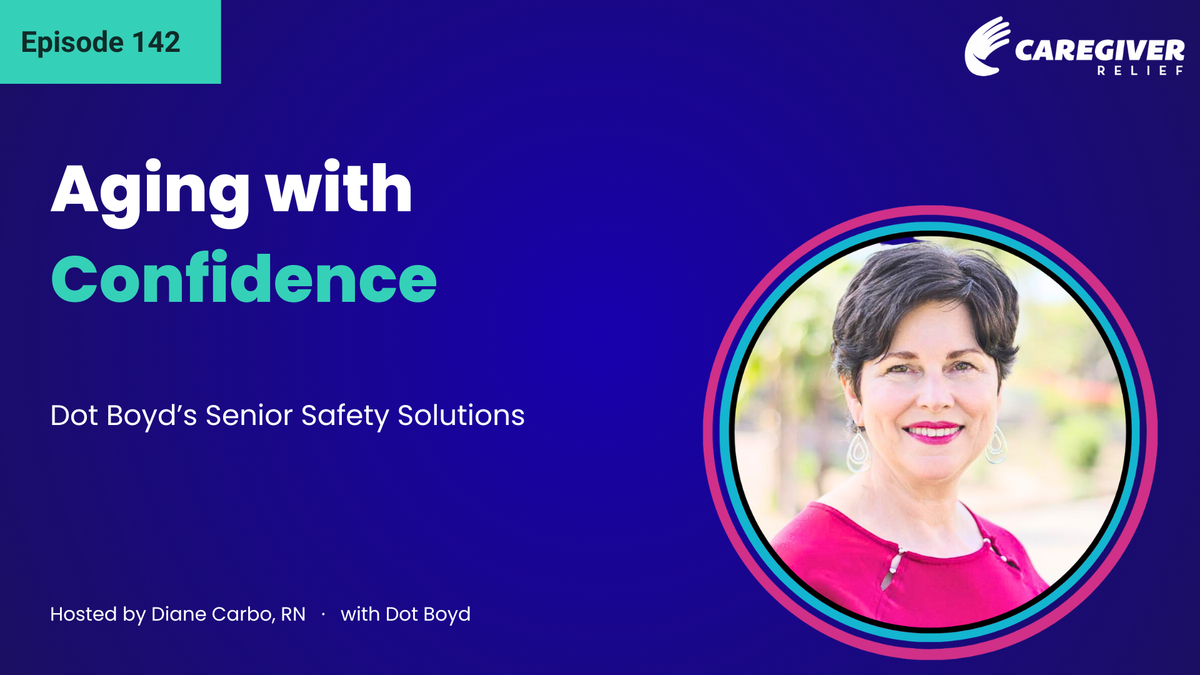
Are you worried about a loved one falling when you aren't there? Do you want to balance their independence with your peace of mind? In this episode, host Diane Carbo, RN, sits down with Dot Boyd, a Senior Safety Specialist, to move beyond talk and get into action.
Dot brings the latest in safety technology directly to the screen, demonstrating how modern solutions are no longer "your grandma's medical alert". From AI avatars to stylish wearables, we explore how to turn a house into a secure home. 🏠✨
📋 What We Covered: The Safety Roadmap
- The Three Key Safety Questions: How to determine if you need protection for "at home," "on the go," or both.
- Beyond the Emergency Button: Discovering devices that include Telemedicine, family check-ins, and vital sign monitoring.
- The "Boomer" Factor: Boomers want fashion and discretion; if a device looks clinical or like an "old lady button," they are less likely to wear it.
- The Danger of the Charging Cradle: Why high-tech smartwatches often fail seniors during 2:00 AM bathroom trips because they are sitting on a charger.
- Meet Addison: A deep dive into the Virtual Caregiver—an AI avatar that provides companionship, exercise coaching, and brain games.
- Non-Intrusive Monitoring: Using wall sensors to track "rise and shine" windows and bathroom trips without using invasive cameras.
💡 Practical Insights for Safety
Dot demonstrates several tiers of technology designed to fit different lifestyles. For those staying at home, the ProHealth device offers simple plug-and-play safety with the ability to receive voice messages from family. For active seniors, portable GPS units provide protection in parking lots or on walks, ensuring help knows exactly where you are.
A major highlight is Addison, the virtual caregiver, who uses a tablet interface to lead seniors through balance exercises and provide cognitive stimulation through puzzles—giving the primary caregiver a much-needed "digital respite".
🌟 Key Takeaways for Caregivers
- Put Your Oxygen Mask on First: Caregivers must prioritize their own safety; if a caregiver falls, the person they are caring for is also at risk.
- The UTI Connection: Technology can help monitor behavioral changes or frequent bathroom trips that might indicate a Urinary Tract Infection (UTI) before it leads to sepsis.
- Customized Response: Modern systems allow you to set protocols where family is called first instead of 911 for non-life-threatening assistance.
🎧 Listen Now & Secure Your Future
Don't wait for an emergency to happen before you start looking for a solution. As Dot says, "Did you schedule your emergency? No. We like to think it’s not going to happen".
Ready to learn more? Visit DotForSeniorSafety.com to download safety documents or schedule a personal consultation with Dot to find the right fit for your family.
"Peace of mind has no price tag." — Diane Carbo


Podcast Episode Transcript
Diane: welcome to the Caregiver Relief podcast. I'm your host, Diane Carbo, rn, and today we have a very special episode. We're going to be talking about something that impacts every senior and every caregiver safety at home.
Joining me is Dot Boyd senior safety specialist, who has dedicated her career to helping older adults live independently and confidently. What makes today's conversation especially exciting is that Dot will not only be sharing her expertise, but also will be showing us a variety of safety products designed to reduce risk, prevent falls, and bring peace of mind to families.
This will also be an informative and hands-on discussion. We'll see how these products work, why they're important, and how they can make a big difference in the daily lives of seniors and their caregivers. So whether you're a family caregiver, a professional, and elder care, or planning for your own future, stay tuned.
You won't wanna miss this practical solutions Dot has to share with us today.
Diane: Dot, I know you've brought some of your top safety products with you today, and I'm really excited because we have had, since you've started doing your podcasts with me, I have people saying I wish I could see them. I wish I could feel them.
I wish I knew what I needed. I. Because people don't know what they don't know. So I'm really excited for you to actually see item in action. So let's start with the first one. Can you tell us what it is and how it works and why it's important for senior safety?
Dot: Yes. I love talking about this. I'm passionate about fall safety, senior safety, and it's all about preserving your safety and independence, right?
As we age. We've talked about that in the previous podcast, so I, when you're looking, when you're shopping for these. Really, you need to zero in on a couple of things. First and foremost. Am I most concerned about my safety or my loved one's safety when they're at home? Or am I most concerned about their safety when they're on the go?
Or am I concerned about their safety at home and on the go? And I think those are the really, the three things to, to look for or to ask when you're shopping around. So I'm gonna start with one of our in-home devices. I love this device because it's simple. This is the ProHealth device from electronic caregiver.
and I am an independent consultant for electronic caregiver, so that's why I'm an expert on these. this one I love because there's, it's very simple. There's no batteries to charge, there's nothing. You just plug it into the wall. Somewhere central in the house or somewhere where you're most concerned about your safety.
For some people it's the bedroom because the up and down at night is a problem. Yeah. For other people it's no, put it in my living room. I spend all day there and that's where I want it, And I sleep in my chair there, so that's my spot. So it all depends, but I, what I love about this is very simple.
It even includes telemedicine. So with the push of this little button here. I can call and talk to a doctor, even a specialist.
Diane: Oh, wow.
Dot: Yeah. Non-emergency. Or if I'm not sure if it's emergency, I could talk to someone and say, I'm not sure if this is an emergency. Yeah. And you can give them your health profile and then they know who you are when you call.
I do have some clients who don't care about that, and so we can program, whoops. I'm backwards to this number, this one here to call a favorite family member. I have folks with some cognitive decline who are not using the phone anymore, but they know this is the button to call their favorite son, push and be connected so it can be customized that way.
Diane: That's a simple but powerful tool. I love that because, especially it gives caregivers, a little peace of mind, especially the working caregiver or the long distance caregiver because they know that they have something that's going to be helping their loved one, stay safe at home.
Dot: Yeah. It's so important. A lot of people just don't realize it. And I'll show you what the pendant looks like, this because. You have to be wearing something. I'm just gonna say this, A lot of people think, and we've talked about this before, Diana, and you know it, yeah. They think they're gonna rely on their phone.
It's either their little cell phone or a landline phone. But I'm telling you, if you're having a stroke, you're having a TIA you, you tripped over your little pet or that rug, you should have thrown him out or whatever, and you're having some sort of an emergency and you fall. Or you're incapacitated.
There is absolutely no way you're gonna be able to get to that phone and call nine one one.
Diane: I've seen it millions of times. So you're absolutely right.
Dot: Yeah. So you gotta have a wearable piece on, you can wear something around your neck, you can wear it around your wrist. I'll show you, pendants that come with this one.
Oh, those are nice. Not bad, right? Yeah. People always think there's some fancy, new iWatch or something, or some smartwatch or something. Yeah. It don't look like your grandma's medical alert. No, it doesn't. And nobody wants to wear that one if they don't have to. Exactly. Although I look at it this way where what's gonna work best for you, because it's all about your safety and independence.
It's about getting help in an instant in minutes rather than hours or days. Yeah. I'll show you. I'll do a little demo. I'll cancel it 'cause it's, otherwise it just goes into demo action. It's boring. But for instance, here's a risk pendant and I push this dial in the emergency response center.
Now to cancel this call, please press the health bar now. Oh wow. Your call has been canceled. That simple, so I could be in the shower. I pushed my button, I slipped. I don't want that cold water running on me, half hour from now and I can't get up. It's dangerous. So I just push my wearable button.
These are all water resistant, designed 24 7. And, the idea being you never know when your accident's gonna be, if you're gonna have one, and it's not planned. So you just have this on and can push it. Now I neglected to bring my little neck hanger out, but loose. Okay. Live audience. I'm a little uncoordinated.
I'll show you. Oh, I'll just pick another button because we're on live TV anyway, you just, these buttons all pop out. See this pretty purple button? I can tell you a story about this button. Okay, so this button, they all pop out. Of the housing that goes around your wrist and they come with a neck housing.
So you can wear this discreetly under your blouse, under your shirt. you can even, put a chain a jewelry around it. I have a lot of ladies who are fashionable. And so then you have it discreetly, you don't have to wear it around your wrist, but in every kit you have the option to wear it either way.
Wow. It can play around with it till you get what you like or depending on what you're doing, you can do that. but I like the fact that there's, some, what the ability to do something different.
Diane: yes. I know, I will tell you right now, the boomers want fashion. They want, they don't wanna look like it's anything, looks like it's a, from a hospital, or gives him any sense that they are aging.
Dot: I know, and we, I talk about this all the time. So yeah, I look at this one here and people don't ever say, oh, is that an old lady button? Is that a Can I get up? No. they usually think, oh, cool, watch, right?
Diane: Yes. But
Dot: it does nothing but be there if you need it. So what's really important to know is many devices that are out there do all sorts of things. Uhhuh, you've got a beautiful smart watch and it can be, checking your heart rate, your steps, what time it is, your email, your phone. Fall, a fall detector. But what happens is, because it does so much, it has to be taken off to charge every day. Yes. The downside of that, there's pros and cons with every device.
Diane: Yes.
Dot: But the downside of that is when it's off, you're not protected. You're not wearing something that's a B. Are you gonna be able to put it on by yourself? And C, are you gonna remember to put it back on? And I know a lot of folks who don't wear their beautiful watches in the shower. And most falls happen in the shower.
They also aren't wearing them at night. That's when they charge 'em. And boy, 2:00 AM you get up to go to the bathroom and you fall. What the heck are you gonna do? Not,
Diane: and you do happen at night when you least expect them. And,I like that, that you, it doesn't have to be charged all the time because if it does, I can see where it'd be an issue and just when you need it, it's sitting in the charger, not work and not doing its job.
Dot: Yeah, not doing its job. I think that's also important. So if you have, if someone has chronic health conditions, this is the device that can, help somebody manage those. So for instance, see this little button here? Whoops. This one here, that is the, you've got mail button. Everybody knows that, right?
You've got mail. Oh, how cute, right? Isn't that cute? So from, there's a mobile app that goes with this. For instance, you can do this yourself, or if you've got helicopter kids or a care manager, they can leave, messages to the device from their mobile phone that then this will ping and it will light up.
We'll do one as an example. I think we have time and, you can be reminded when it's time to take your medications. Time to exercise. It's time to drink more water, whatever. good morning, Grammy. I love you. I'm your favorite granddaughter. Have a great day. Don't forget me at Christmas or whatever, you know what I'm saying?
But, there's just to check in and what's so wonderful is with the mobile app, you can, somebody can set up medic, re any kind of message to be a one time or recurring. And multiple times. And then when the person plays the message, it shows on the mobile app that they got your message, so We've talked about worried daughters and daughters-in-law.
Diane: Yes. This
Dot: would be a way to know that mom's up and about in the morning because she left her a good morning message and she looked forward to that and she played it.
Diane: You know what's really nice about that too is the senior, the receiver, the care receivers actually having interaction with their family members, and it gives them a reason to get up in the morning.
It gives them a reason to look forward to something because somebody may be contacting them or is contacting them on a regular basis. And I really like that.
Dot: Yeah, I do too. Diane. I think about how our world has changed where people just text, right? Yeah. Grandkids are not really calling.
Diane: But maybe
Dot: they can leave a sweet message and it's programmed to be delivered every day at the same time.
And then there's no phone call. And then sometimes seniors don't even pick up the phone anymore, aren't using a phone, but that hearing a cheerful voice friendly reminder or, Hey mom, I'm picking you up for your appointment today at one. Can't wait to see you. Whatever. Just something. And then there's these interactions.
So that's not, the person isn't completely isolated. So this, those are some aspects of it. And I'll show you really quickly. So for instance, you can add different peripherals to this. And so if someone needs to be checking any vitals They can do that too. And all of this is stored in the mobile app.
Oh, so when you get to the doctor and you have connected to thermometer, please wait. You'll have all your data and you can show 'em in your mobile app, or your kids can,
Diane: oh, wow, that's very, or
Dot: you can email it to them.
Diane: Uhhuh,
Dot: you're not waiting until two days before your appointment is starting to do everything.
Diane: I know seniors that do that
Dot: reading is 36.7 Celsius, which is 98.1 degrees Fahrenheit. Very nice. Yeah, Your device will power off automatically after several minutes. Please do not take any measurements during this time. I'm a little warmer than usual. It must be 'cause I'm on a Zoom call. I'm on a recording.
Diane: It's your electric personality coming out. It's heating you up. Oh, is that what
Dot: it's okay.
Diane: Absolutely.
Dot: Check this out. I'll show, I'm gonna try to show you on the iPad just because I'll take it out of its folder. It easier because I think it's easier to see than on a phone. Uhhuh. This is all just a mobile app that, again, the user doesn't have to have the mobile app.
But the loved ones might wanna have it, adult kids who are worried sick. So I can come over here to wellness and see how it shows my temperature. Say, oh yes, very well, but I'll hold it up to the camera really close without glare. There it is. Yes. And then I could be doing that multiple times a day or whatever.
It could be anything from blood pressure reading to, gosh, I'll just show you a picture so you can see. Different things because you being a nurse, Diane, these things, you're able to see. Okay.
Diane: Without too much, Paul Fox and the thermometer. there's so many things that I really like about this.
It's, it's practical, for, again, the working caregiver or the, long distance caregiver to be able to give them peace of mind, while they're, and know that their family member is being cared for or monitored.
Dot: Exactly, because you can't be there 24 7 and honestly, nobody wants you to be
Diane: No.
Dot: You can't.
Diane: Yeah, absolutely. Absolutely.
Dot: real quickly, if we have a second, I'll show you how to leave a message. 'cause I think we, since we talked about that,I'm just gonna show you then here on the mobile app a little bit. Okay. There's a little message button. Okay. Hi, Diane. Thanks for having me on your show today.
I'm having so much fun. You're the best. Everyone should be calling you. Have a great day. Bye. Okay. so now if you can see this on that, you know
Diane: what I have to tell you, that's very easy. Even a person that has no, computer knowledge or anything can learn that task and it's wonderful.
Dot: I'm just gonna tell your audience, I am not a techie.
I'm the last person in my age group to be doing anything like this, and if I can do it just about anybody can. So there it is. I left a message, so now I'm gonna hit the arrow. I'm gonna send it or schedule it. I'm, instead of scheduling it for later in the day, we're gonna do it now. So I'm gonna say send message now and we'll let it just, it says thinking of you, but I could have changed it to thank you Diane, but I'm just gonna hit send.
Diane: Oh, you got mail. So cute.
Dot: Flashy. Hear that chime? Yes. Now it's backwards on the computer. You have one new message. First message. Hi Diane. Thanks having me on your show today. Oh wow.
Diane: I'll tell you what, that is really awesome. 'cause we, a lot of seniors can't go out to their mailbox and check their mailbox anymore. And, and you don't want them to because they could fall or whatever. I love that they can actually have mail, come to them a voicemail, and it's gotta give people something to look forward to.
That's lovely.
Dot: so I'll show you. Remember we just left it in the default of thinking of you, right? So I have this message, if you can see it, it says, thinking of you, and then it shows that I played thinking of you so you'd know your loved one got the message. So that tells you. Hey, mom's okay.
She hasn't been picking up the phone, but she got her message so I don't have to worry so much. Or,
Diane: some peers get bombarded with all kinds of spam calls, during the elections or Medicare cha enrollment period, and they just stop answering the phone. A lot of them,
Dot: yeah. They do. They do.
and if they have a landline, it's really not near them generally. 'cause it's usually sitting in its charging cradle. Yes. Yes. That's, but yeah, they're getting spammed, so at least this is a way to stay in touch.
Diane: I just love that.
Dot: Yeah. It's pretty neat. I think this is an amazing machine, so it's ideal for anyone who.
Really is most concerned about their health and their, their emergency,being able to sum an emergency help when they're at home. Yes. And it comes to the front yard backyard because the mo, the wearable device has a long range. the other thing that I wanna remind folks is you get to customize the protocols.
It's not always about dispatching emergency help. Sometimes families will say, oh no, I'm fi I live five minutes from dad. So I wanna be called first. So if he pushes his button and he's on the device with the live operator, 'cause that's who comes on, this, hello, this is electronic caregiver.
Do you need emergency help or assistance, right? And they know who this person is and they know their health conditions and their allergies to meds, their preferred hospital, where their medical directives are posted, even how to get in the house that the door's locked, all of these important things, right?
And then the emergency call list is being notified, but families get to decide. first call me because if I'm nearby, I'm gonna run and check on dad. And if dad needs help, then we'll push his button or we'll tell the operator, yes, please send help. So everybody gets to customize the response and change it as life changes.
I think that's, I like that. The flexibility of it. And you know what else I like? These are making small changes in a person's life and seniors do not like change. it's horrific to them. And these are simple changes that can make a huge difference in their lives. and it gives the caregiver peace of mind, and that's priceless.
Dot: Absolutely. And I know a lot of people do ask about fall detection and I didn't wanna neglect that, but there is a fall detector that can be paired with it. Okay. And fall detectors are a funny bunch because they can give off false alarms and they can miss alarms. So I always tell someone, don't rely on this a hundred percent.
I don't care what fall detector you're wearing, there's no guarantee that it's gonna go off. 'cause if somebody B or slides off a chair, they may not bounce around. If they're wearing it under their clothing, it can't bounce around. And what it has to do is, and they all do, they have to, there's a calibration inside for.
Knowing, oh, it was very, it was vibrating and now it's gone stale. Uhhuh. I have a gentleman who gets up right away. He starts moving around. The minute he falls, he is trying to get up. so far he hasn't found a fall detector that's gonna work for him. And, we're we, I'm working with his wife to try to figure out what else can he do, because he won't just lay still.
He's gonna try to get up, which doesn't give the device long enough. Anyone's fault detector long enough to go. what's real or not, or if you've got some there, they go off all the time and no one pays attention to 'em anymore.
Diane: That's what happens in nursing homes and assisted living. The alarms they, everybody becomes, and, just they fatigue.
it's fatigue, it's alarm fatigue, and they hear so many alarms going off and,it, they're worthless because nobody goes to help.
Dot: Exactly. and I even talk with folks because, and they may be my client and now they're moving into assisted living.
I, and I wanna counsel their service with me, which of course they can do.
No, yes, no, no penalties, no hard feelings. But I do caution them because I've been told by these communities, these senior living places that, when someone pushes their alarm or. Close the court or whatever. we might get to them right away, but we might not, because it doesn't mean there's an emergency.
Diane: I can tell you I worked for, upscale. I was, director of nursing at a very upscale assisted living, and I I say this, it upsets people, but assisted living is the most dangerous of all the medical delivery systems. Only because it's based on a social model, not a medical model.
And a social model means the person has to be able to direct their care. And we have people that work at McDonald's are the people that are at the assisted living taking care of you. They don't have any medical. Background. Now, you may have a nurse on staff, or you may not. I know a lot of nurse. they may have one nurse in the whole building and then people that, that are passing pills just have been taking a small few hour pharmacy course and, things are missed.
and it's just, it's very unfortunate, because nobody's going in on a regular basis to assess somebody. So my thoughts are. Have them call me because I'd say keep this, I think they're wise to keep this because assisted living, and again, it depends on, the facility, but most of them don't, don't staff at a good, level and it.
and if you don't pay for extra like visits to the room for things, you get charged for it. So this actually is a cost effective way to be able to monitor your health and not be charged big bucks from the assisted living facility. And it stretches out your, dollars, to stay in the, in that building longer.
Dot: I, yeah, you. Perfect point. 'cause it's 60 bucks a month, give or take on this one. Yep. that's cheap compared to the hundreds and thousands of dollars. 100% need someone to check in. What I think is important to note too, that with this particular service, with my service, the subscriber, these phone calls go to emergency medical technicians.
These are, medical responders. The operators are trained, all they do with the biggest company across the us all they do is take calls all day long. And dispatch for, emergency devices like these as well as home alarms, this is their business. It's the most advanced probably in the world, and that's who we contract with.
So when the operator's on your device, they stay on that device until help is by your side. Now the protocol may be to call the front desk or the 24 hour number for assistance. But that operator's on the line, on your device waiting to see what's going to happen and they know that someone's not coming or someone is coming, but until someone's by your side.
So now you've got someone who can dispatch help right away if they're not coming. They can dispatch the first responders to you. and you don't have to wait. So that's an extra layer. That's pretty impressive. Yes. Yes. Very impressive.
Dot: All the while your family's being notified. In real time via text and phone calls, depending again on how the family has set it up that, oh, there's been an alert, right?
yeah, that's, I just, I love this. I love the simplicity of it and I love the things it can do. And all the wearer of the button needs to know is to keep that button on 24 7 and push it if they need it, or wear the fall detector, which also has a push button.
Diane: That's awesome. That's awesome. it just adds up to a safer home environment, even in assisted living.
Dot: Yeah, absolutely. Absolutely. And when we're, since it is national caregiver month, right? Yes. A lot of folks and care partners, the focus is on the patient and there are times, and I'm sure for you too, Diane, but definitely for me because of the services I offer. I have, usually a care partner, a spouse, best friend, family member calling about a loved one who has cognitive decline.
Yes. or is following law or this or that. And very little attention is paid to them. Their own wellbeing, right? Yes. Do they weigh first put on your own oxygen mask first? 'cause you can't help anyone without doing that. Exactly.
Diane: Yes.
Dot: They don't realize that their loved one may not be able to use a device like this anymore.
It's possible, right? But boy, they sure need something because they're the superhero leave coming and going, right? Taking care of their loved ones, trying to do everything they always did. And if something happens to them and they're not able to push a button and their loved one can't call 9 1 1 for them, what are they gonna do?
You have a calamity right there happening, before everyone's eyes. So I'm gonna say directly to your least caregivers out there first, take care of you. 'cause you are no good to anyone if you aren't looking out for yourself. Just so that you can look out for your loved one.
Diane: I hope you guys are listening out there because this is good information.
That's something I try to tell every caregiver, every single time I talk to them, is, yeah, you have to focus on you as well and your health. So that's why these. Products that you and services you are offering Dot give such peace of mind. And they're not on, they're not just gadgets.
They're confidence builders, not just for seniors, but it's peace of mind for caregivers. And that's amazing.
Dot: Absolutely. Without a doubt. I tell you, I hear, oh, good, now I can sleep a little bit better tonight. I get you. That's from the daughter-in-law.
Diane: Yep. No
Dot: offense guys, but it tends to be the women.
We're still, it. It does
Diane: for the majority. there are male caregivers, God bless them. I've worked with several. but it, the majority is women. It is,
Dot: yeah. So that's that's the in-home device. I can show you the one that is also for in-home, that has all the amazing bells and whistles. I can do that one next.
It's called virtual caregiver. She's a little bit, challenging to demonstrate over, zoom, but we can do it. So this is Addison and she's an avatar and I didn't know what an avatar was two years ago, that's whole thing that's created, right? Yes. And she's got a fun personality. I apologize for the glare, but I don't know how to get her around that.
And Addison is a proprietary product of electronic caregiver. I didn't invent any of these things. and this is pretty darn amazing. So I have her in privacy mode 'cause you can have her in privacy mode, but you would have a tablet similar to this in your home, maybe in multiple places. Ooh, she's tending to her fish and you can talk to her.
She is, when she's the real deal. Mine's a demo unit, so not everything is voice activated. But you can talk to her. she's gonna have your medication schedule. She'll remind you whatever needs to be in there for reminders. It's all in there. and all of your information with any of these devices is all HIPAA protected and encrypted and, locked in the vault basically.
Good point. So with that, that's, I think, important to know because none of us want our information shared and you are providing who is on your emergency call list and they're the only people. Who can have your information unless you release it to your doctor.
Okay. So what I love about Addison is she's fun and she's helpful.
Ooh, she heard me see. So now menu came up, right? And she's here. Hi Addison. So I could walk you through a few things just so you get a sense. here, for instance, since we've talked about, over the course of time, how important it is to have. do your balance and fall exercises.
Anything you can do. Yes. She's got a home routine like you, she'll help you. You can have a reminder so you don't forget, but you can pick what exercises you wanna do and she's gonna show. Oh wow. Check it out. I know, right? Yes. This is so important. You get to pick so we can do, what do we wanna do there?
Diane, what should we pick? Oh,
Diane: let's do, knee bends.
Dot: Everybody needs those knee bends. Okay, here we go.
Diane: While holding onto something sturdy, lift your foot up so it's slightly above the ground behind you. Remember to only bend from the knee. We don't want to also lift our thigh in the process.
Try to get your lower leg to a 45 degree angle behind you. Hold this position for just a moment and then slowly return your foot back to the floor. That's cool. Times for each leg,
Dot: right? Yes. We're gonna exit fitness 'cause we're exhausted. Yeah. Or as my mom used to say, for some humor, exhausted. Oh, thats funny.
Now. Yes, you would exhaust. We would laugh. So I'm gonna say yes. We are exiting. So that's just one, one thing. There's a whole calendar in here. So you could, or someone else can put all your important stuff in the calendar. Okay. And it tells you the weather, everything. that's neat.
Oops. I went back to October. You can actually, when this is the live version, you can say emergency, and she will now engage. The same way any of our devices would, and get the emergency operator on the line, the one that is contacted. So it's not 9 1 1. What's important to know is when you're calling 9 1 1, you're either getting the highway patrol or maybe local police or local fire.
You might. It just depends. And if you're calling from a cell phone, I gotta figure out where you are. Of course this device already knows where you are. So did the other device uhhuh. But this operator knows who you are. So one of the main differences for having,many of these kinds of subscriptions is you are known to the operator.
You are. You may not need emergency responders. You may be, just need to talk to someone and say, know I'm feeling a little dizzy. And then they'll look at your, medications. we have, health coaching that comes with it. You can even talk to the health coach. They'll look and see what your protocols are.
But it doesn't mean you see with, when you call 9 1 1, you're all in or all out. There's no exactly. lemme see. I'm not sure. And my health, they're okay. They just wanna get, get you off the phone. So in this case, your health protocols are there and that sort of thing. And with by just hollering out emergency, you can get emergency help.
You can also, just say, call 9 1 1 that, that's the same thing. It'll still get them. just to give you an idea, you can also do vital signs, the same kind of thing I can have my vitals scheduled or I can take it the same kind of thing. I just decide, Addison temperature, and then she's gonna do my temperature, for instance, or my pulse ox or whatever it is assigned.
'cause it's the seven, the same seven peripherals can be added. and she's fun and she's got games, she's got all sorts of stuff because you wanna keep your brain active. So we know there's exercises, but it's also important to have, let's see here. Whoops. Lemme go over to options. So this is where you can change things.
Oh, hey, we can personalize Addison. If I say change avatar. There's some choices there. Oh,
Diane: lots of different ones. Yes. Lots of
Dot: different ones. Yep. Yes. And the voice changes, so I love that. So you get some, someone that suits you better, right? Yes. there's, you can have the holidays, you can change the house, because you might like different kinds of houses, Uhhuh.
I like being at the beach, so I tend to pick that one. Me
Diane: too. Me too. I have to tell you that one of the things I want my caregivers to understand is that you have games in here and activities are such an important thing that is so overlooked. it keeps the senior. engaged and it also, can decrease or eliminate negative or challenging behaviors.
So having games and things available is, activities are so important and they're the most overlooked, and it gives, this, the caregiver actual respite from the senior a lot of times because they're involved in an activity.
Dot: Absolutely. It can be soothing. It can be stimulating. Yep. It's fun. And there could be a lot of repu repetition, especially if there's any cognitive decline going on. Yes. But just for isolation. And sometimes a caregiver is oh, not that story again. Or not that question again. And what if there's some fun engagement?
That is one-on-one, and you don't have to be involved in it. Now, you could play along, but these are, they're solitaire, there's brain gain. I don't even know how to play some of these yet because they add new ones. There's a puzzle. I like the puzzle. I can pick the easy one that's it gives me choices.
So when I go over to Puzzle Rama. it's it Come on puzzle, Ron, aren't you? Not? Oh, start game because I'm not paying attention. So then I get my, I get a, the choice and I get to, oh, wow. There's just some examples of some of the puzzles, right? Yes. And then, you are, let's see, what else is there? Ooh, they've added a whole bunch more, Awesome.
Oh, hey, is this pizza? Is it lunch? And then I'm picking easy, but EEA easy is 20 pieces and it goes all the way up to 88 pieces. And then, you're just putting moving puzzles around pieces. I'm glad
Diane: it doesn't have thousand pieces.
Dot: Tell me about it. There's music. See? Oh, that's nice. So lots of work too. So I'm just gonna put pieces there and see where they all end up fitting uhhuh. But it's stimulating. Yes. And Yes, like you said, a respite for the caregiver.
Diane: Yeah.
Dot: 'cause you need time for yourself and you've got to find ways to have a person love what they're involved in here, being very engrossed in it. So you can go take five minutes and, breathe, take a shower, eat a sandwich.
Diane: Yes.
Dot: Something. So that's just to give you an idea of, Addison, but there's all sorts of things that can be,programmed for her and, including the messages and reminders. And like I said, there's health coaching involved and, chronic condition management, all sorts of things really, depending on what a person wants.
And this one's really in the neighborhood of two to $300 a month. Plus, a device fee. Still in the realm of things. If it helps keep you on track with your health and fitness, it helps keep, your family members thinking, okay,mom's engaging with her Addison, and we see what she's doing and she's on track.
She's really determined to live alone and looks like this is a piece of the puzzle. Speaking of puzzles, it's, these are all, and I feel
Diane: what it's it again, peace of mind has no price tag.
Dot: Exactly. Absolutely. Peace of mind. We've all had those sleepless nights and I bet you anyone watching this will be nodding their head like, yes.
Diane: And Addison offers a lot of, opportunity. it's, it can. Be on top. if a person has a urinary tract infection, they may become confused. They don't always have to have a fever, they don't have to often pee. Often, there's just things that change and a confusion. And if somebody is aware of that.
Relatively early, you can just call the doc and say, Hey, mom seems confused today, or she's erratic. can we get, a script for a urinary a test or go to the, pharmacy and pick up a test on the way home and give mom to see if she has a urinary tract infection. Because, the seniors don't have signs and symptoms except, a lot of times they don't have the temperatures, they don't have the frequency.
They don't even have, blood in their urine. They just may have, behavioral issues that may just be, a urinary tract infection. So I like being able to monitor that.
Dot: I have to tell you, that was one of my mom's. Most frequent issues, in her last few years of life, frequent urinary tract infections, and the symptoms weren't like they used to be.
So sometimes it would be a behavioral change. That, was just all of a sudden, right? We would have, oh, we mom's delirious mom's, mom's changed something's wrong with a urinary tract infection. It's so clear. And so I even tell people now, if all of a sudden your loved one, your parent is acting like there's some dementia going on, please don't let anyone tell you that's what it is.
If it came on suddenly, it is probably a lovely UTI and you wanna get those in the bud.
Diane: I wanna tell you, I had a call from a client whose mother was in a very high end memory care unit. he was spending almost $10,000 a month, and he calls me and says, my mom's behavior has become so erratic for the last two weeks that the a facility's going to kick her out.
I said, whoa, wait. And I said, did they check her for a urinary tract infection? And he called and they said, no, they didn't. This is why I say they're not medical people. they're not trained. And she actually ended up in the hospital with sepsis and, was able to be okay, treated.
But it's the behaviors can get worse and it can lead to, kidney shutdown and all kinds of things. So you. Or sepsis, which is awful. but we, had that one call to me made a difference. 'cause he was like, what am I gonna do if she has to get kicked out from Memory care?
'cause this was not her normal behavior. And, that's why I bring it up, that people really have to stay on top of their loved ones in, at home and in an assisted living environment.
Dot: I agree with that. And with the Addison, it comes bundled with a couple of things that I haven't mentioned yet. And I'll just go over one briefly.
It's really in, still in development stages, with more Things coming, but it's called, the Addison Care Aware, and there's these four little sensors. They're pretty neat. They go in the main room. So let's say the bathroom, the bedroom, kitchen, family room, let's just say that's the typical Uhhuh place to.
And they work off of wifi. So a person has to have wifi. It plugs into your outlet. and you still get an outlet. You can still use it as an outlet, but what it does is it sends signals and the, your loved one, your, care partner, your kids will have a mobile app that goes with it and they can see, oh, gee whiz, mom's making a lot of trips to the bathroom.
Maybe there's something going on.
Diane: Yep. Or.
Dot: Okay. Dad didn't get out of bed this morning during the rise and Shine window that's programmed in, we better go call dad or check on dad because something's amiss. So these are really basic. They, they're not, they don't do everything. there's no wearable involved.
At least it's something, it is, it can help nip something in the butt. It can help. Give some indicators, some data that, oh, mom is too isolated. Mom needs some caregiving. Dad, dad sits in that chair all day, we gotta get him up and moving, right?
Diane: Yes.
Dot: and
Diane: these are home safety, solutions for any caregiver for different price ranges, and that's really important too.
Really I like because this one specifically because it's non-intrusive. it's this, the sensors are in the walls. 'cause I could hear seniors saying, I don't wanna be videotaped, I don't wanna be watched. And this way they can be monitored. And it's, unintrusive, it's not right in their face saying, we are watching you.
Dot: Nobody wants a camera. when families come to me and say,we're putting cameras in dad's house, oh, great. I'm sure dad loves that, right? I understand if someone has extreme cognitive decline and they're putting cameras in, but that worries me if the person spending time alone. But if they're up and about with it, being photographed or knowing that the kids can look at a camera at any time and see them.
that's, most of us wouldn't want it. And then you can't put that in the bathroom and you need to know what's, is there something happening? And at least the sensor would tell you multiple trips to the bathroom, this is not normal. We better check. That kind of thing.
Diane: We have a growing aging population, and we don't have enough youth to monitor our seniors or provide care for them, so we are really in trouble.
It's a public health crisis right now, so we have to rely on technology to support us through the every caregiver journey. Yes,
Dot: we do. And I think there's a lot of reluctance with the older generation Yes. To rely on to even use technology. And I often will have someone say, oh no, I don't use technology.
of course you do. You turn on the oven today,
Diane: right? You use the microwave, you watch tv,
Dot: you flush the toilet. All of these things were big deals in their time. And so it's all technology, but I don't need, I like to use, innovative solutions. 'cause I know I, technol tech is a four letter word.
Yes. But, but I know that if I can use it then you know,
Diane: anybody can use it.
Dot: Anyone can it. And the other thing it comes, the Addison comes bundled with, or you can get this on your own, is this is the portable unit. So Addison works in the home. so that's why you've got the sensors that's all working at home.
This is a wearable piece where around it can be worn around in a pouch around the, on the hip, but I'm not as keen about that. right here,outside of your clothing or tuck away discreetly, you can't even see I've got anything on. If I go, I put my blouse on correctly, but, which I can't do because it's a mirror image when you're being photographed.
But anyway. I get that. but for, to use to be fault detector, it has to be worn outside the clothing because it's like that other fault detector. It's gotta feel, it's gotta move around freely, right? So with this piece, it's all in one. This is portable, it has GPS in it. It comes with that mobile app.
So if family members can see, okay, mom's at the grocery store, blah, blah, blah. Normal routine, oh, good mom got home in one piece. 'cause again, they can look at that mobile app updating every half hour. And then if they, if a person gets into trouble and I'll do a live example of it. We would just push our button or the fall detection would go off.
this is really for independent seniors. You wanna be. You are driving, you're taking walks. You're not gonna get to your phone. If you are in a parking lot and something happens to you or somebody accosts you and you, a nice person comes along and calls 9 1 1, that's great. Yeah. But they don't know who else to call.
So right. You could be on your way to the hospital and no one knows it. And with this you've got your emergency call list. They are contacted by electronic caregiver. It all happens simultaneously. And the live operators right here on this, right here on the button.
Diane: I love that because I'll tell you,
Dot: we'll let it go through just so people get Yes.
Remember it's pinpointing my location.
Diane: Oh
Dot: no, I'm just testing my device today. This is she.
Diane: That's cool.
Dot: Have.
Diane: I, in Myrtle Beach and we have seniors walking on the beach, and I'm on the beach a lot, sometimes by myself. And I can see where I, in fact, I just was with a friend today. We were, visiting and she got up, we were loving on some dogs,and, she got up and she had a vertigo episode and she got really dizzy.
And, if I hadn't been there, she would've fallen. And, she would've hurt herself and nobody would've known she was even there because this was just, we were out of the way, visiting. so I just thought, oh my, but it happens all the time. I've seen, I had a, an episode this summer. We had a horrible heat wave.
it was the hottest we had ever had, and I must have been dehydrated. And I get up and I go to the beach, I take the dogs to the beach, and I had an episode like I've never had before. I got up to the, the handicapped ramp and the dogs, the girls are with me and,they hovered around me and I just had to grab onto the.
All of a sudden I got really dizzy and I was probably dehydrated and didn't realize it because I'm a, usually a good drinker, but I was probably, it was sweaty and hot and it was early in the morning and it was only by the grace of God there was a man there, and I said.
I need help. And of course, he goes, what do you need? And I grabbed onto the rail and I passed out. It was just for a short, brief moment. But if I hadn't had him there to help me get to the car, to get some liquid in me, I would've, and that's the first time ever, and I'm 72, that anything like that has ever happened. So it made me aware. I as much, I'm alone a lot, going out to the beach or whatever and walking.
it, I should consider something like that.
Dot: Yeah. I definitely, when my husband is gone, when I'm home by myself, boy, I am really good about wearing my device. I'm not gonna be falling and, or having a mishap of some sort and laying here for a couple of days.
Diane: Yes.
Dot: Where nobody knows because I work from home, so how does anybody know if I'm well or not?
Yes. And so I just know too much.
Diane: I know, I get it. And I do too. And that's why I, and I've seen some horror stories of people that have been, have laid for days. I've literally taken care of people in the hospital that were found days after. And, and they weren't able to move or,I, my girlfriend's, mother went through the, flooding in Asheville, North Carolina and how awful that was.
And she, all the electric went out. So she was. Stuck for several days and she kept trying Alexa, she kept trying and nothing worked. thankfully, she was at, in a good spot in her community. They were up high enough that they were able to help one another. But it does happen.
Dot: It does happen.
and we're spending so much more time alone now than we ever did. Yep. we might outlive our spouses or be divorced, or our family is spread out all over the country. Whatever we, it's not and communities don't all know each other, like how many people know their neighbors.
Diane: Exactly. How many
Dot: people really.
And if you live in a neighborhood where there's been turnover and you've got young people who are going to work, raising kids. And you are retired and living alone in a house in that neighborhood, do they know you? Yeah. Do what happens during the day when they're all gone and you went to the mailbox and you took a fall, right?
You're at the mercy of, a delivery driver driving by and seeing you and calling for help, right? You, yes. You're, you are relying on others. Or even a phone, which we all know is just really not a great plan, in an emergency that we didn't put on our schedule.
Diane: yes.
Dot: My, my colleague in Mississippi always says, do, did you know, did you schedule your emergency?
Do you know when it's gonna happen? No. And I like to think it's not gonna happen.
Diane: yeah. And, denial is a coping mechanism, but it's not a good one for us because, accidents do happen and it. Good to be proactive that you've had. So you've provided so much information today.
I, I really love this. This is incredibly informative and helpful. Seeing these products firsthand makes it easy to understand how practical and effective they are. they really, truly are, confidence builders for seniors and, as far as caregivers. Anything that will give them peace of mind is priceless.
I, I know, so many of them are so stressed, they become seriously ill, with their own is health issues. So I really love this. before we wrap up, can you share how people can learn more about these products or reach out to you for guidance?
Dot: And I, if I share my screen, I can bring my website up. Is that helpful too?
Diane: Yeah, you can do that, but we'll put it in the show notes and we will put it in our permanent page that we create. all that.
Dot: Oh, I think there's a pro, you have to gimme permission, so it may not. If you're getting request, it's not
Diane: letting me hit the button. Okay, I'll just line it.
Dot: So you just go to Dot for senior safety.com.
So I'll spell that. D-O-T-F-O-R, senior safety.com. Okay. that's the best thing. you can look at different products. You can download safety documents. I'm always adding new resources and new information, and our podcast will be there. our last one I'm gonna put up soon and then, you can also call me or text me.
Nine one six seven nine nine one six. I help folks all over the country, these devices throughout. If I'm not local to you, I'm happy to advise you. We can do a Zoom call, a FaceTime, a telephone call, whatever you would like with your family or you directly,to really, I'll ask some questions where, what are your biggest concerns?
How can I possibly help? And let's see what's out there. That is a good fit, right? Because the best device is the one that your loved one will wear, not the one you think they should have, the one that will wear
Diane: Absolutely. Absolutely. And caregivers need to realize that. And what I love is you give the personal touch.
your, you know your business, you know your products, and, you know what you're doing. And you've worked with so many seniors that, caregivers need to come to you for guidance. you're the expert and I appreciate that. So thank you so much for your time today. I'm so excited. We will do this again.
I think that this is really important Dot to my family caregivers out there. You are the most important part of the caregiving equation. Without you, it all falls apart. So learn to be gentle with yourself, practice self-care every day because you are worth it.
Caring for a loved one can be overwhelming — but you're not alone. If you have questions, big or small, our expert team is here to help.
👉 Click here to Ask the Expert
Our Resource section can help you find the information and tools that you need. We have courses, videos, checklists, guidebooks, cheat sheets, how-to guides and more.
You can get started by clicking on the link below. We know that taking care of a loved one is hard work, but with our help you can get the support that you need.
Click here to go to Resource Section now!
You might also like this article:
 Diane Carbo
 Diane Carbo