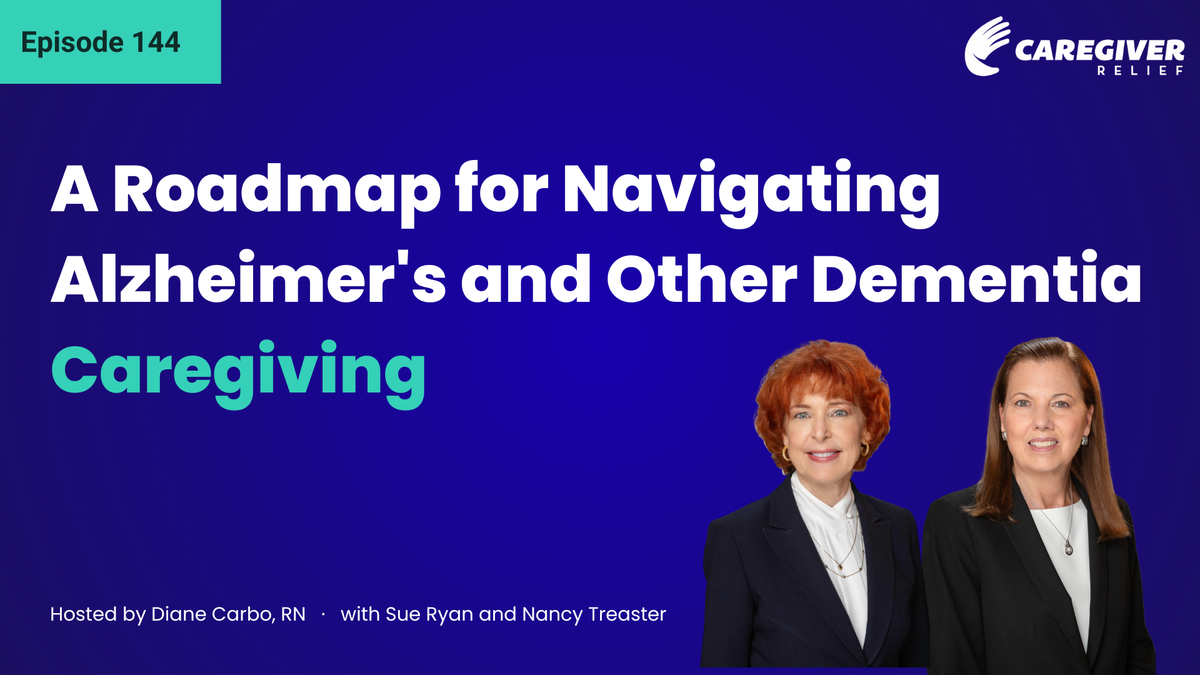
A Roadmap for Navigating Alzheimer's and Other Dementia Caregiving with Sue Ryan and Nancy Treaster - Episode 144
Have you ever felt that fleeting moment of relief when a doctor finally gives a name to your loved one’s condition, only to be immediately hit by a wave of panic asking, "Now what?"
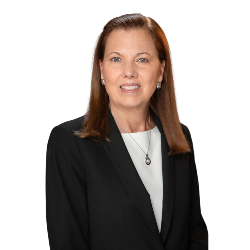
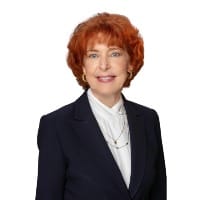
In this powerful episode of the Caregiver Relief Podcast, host Diane Carbo sits down with Sue Ryan and Nancy Treaster, creators of The Caregiver’s Journey. Colleagues and friends for over 35 years in the software industry, Sue and Nancy found themselves walking strikingly similar paths: caring for fathers, father-in-laws, and husbands with dementia while managing demanding careers.
Frustrated by a medical system that offered diagnoses but no practical direction, they joined forces to create a roadmap that moves caregivers from overwhelmed to underwhelmed. 🗺️ ❤️
🎧 What You’ll Learn in This Episode
This episode is packed with candid advice, practical strategies, and a message of hope. Here is what we cover:
1. The Reality of the Diagnosis
Sue and Nancy discuss the "sinking reality" that sets in after the initial relief of an explanation fades. They highlight the gap in the healthcare system: you get a medical diagnosis for your loved one, but "crickets for the caregiver" regarding what to prioritize or how to manage daily life.
2. Massive Acceptance and Radical Presence
Sue introduces two transformative frameworks for caregivers:
- Massive Acceptance: Accepting exactly what is happening in the moment without judging yourself, the situation, or your loved one.
- Radical Presence: Being fully in the "now" to make wise decisions and find small moments of beauty amidst the challenges.
3. The Working Caregiver's Dilemma
Both guests were working professionals during their caregiving journeys. They share crucial advice for working caregivers: Self-identify early. By letting your employer know about your situation sooner rather than later, you can often find support and flexibility, rather than looking like a distracted employee later on.
4. Creating a Village
Nancy and Diane discuss the necessity of building a care team. You simply cannot do this alone. They discuss how to overcome the guilt of asking for help and why you should accept every offer of assistance—whether it's a ride to the doctor or just sitting with your loved one while you shower.
5. A Roadmap for the Journey
Nancy explains how they created The Caregiver’s Journey to filter out the noise. Instead of drowning in Google searches, their roadmap helps you focus on exactly what you need to know right now, based on where you are in the disease progression.
📝 Episode Outline
- Welcome and Introduction to Sue Ryan and Nancy Treaster.
- The moment life changed: Hearing the word "Dementia."
- Navigating different diagnoses (Parkinson’s, FTD, Alzheimer’s) but similar caregiving challenges.
- Explaining Massive Acceptance and Radical Presence.
- Advice for the working caregiver: Don't hide your journey.
- Overcoming the "Shoulds": Dealing with guilt and judgment.
- Diane on the "Silver Tsunami" and the broken healthcare reimbursement system.
- How to access the Navigating Dementia Caregiving Roadmap.
💡 Key Quotes
"Knowledge creates confidence. Confidence gives you peace of mind. And when you have confidence and peace of mind, you are a much more patient caregiver." — Nancy Treaster
"Massive acceptance means I accept exactly what is in the moment. I don't have to like it. I don't have to agree with it... I just have to accept it without judgment." — Sue Ryan
"You are the most important part of the caregiving equation. Without you, it all falls apart." — Diane Carbo
Resources
- The Caregiver's Journey: Visit thecaregiversjourney.org to access their podcast, blogs, and the Navigating Dementia Caregiving Roadmap.
🎙️ Why You Should Listen
If you are feeling blindsided by a recent diagnosis or burnt out by the day-to-day realities of dementia care, this episode offers a lifeline. Sue and Nancy don't just offer sympathy; they offer a strategy.
Podcast Episode Transcript
Diane: Welcome to the Caregiver Relief Podcast. I'm your host, Diane Carbo rn. Today's episode is a powerful conversation with two extraordinary women, Sue Ryan and Nancy Treaster.
For each of them. There was a moment when life changed forever. The moment they heard the devastating word dementia. Both experienced that fleeting relief of finally having an explanation followed by the sinking reality of what lay ahead. Sue and Nancy are colleagues and friends of more than 35 years walk separate, but strikingly similar caregiving journeys, caring for fathers father-in-laws and husbands, all while managing demanding careers in the software industry.
Out of frustration with the lack of real practical guidance for families, they came together to create the caregiver's journey. Sue a keynote and TEDx speaker, bestselling author and executive coach has built caregiving frameworks like massive acceptance and radical presence to help caregivers move forward with confidence.
Nancy, a retired software executive and certified caregiving consultant, brings her strategic acumen and personal caregiving experience to provide frank actionable advice. together. They've created a roadmap for navigating Alzheimer's and other dementias offering caregivers not only strategies, but also hope.
Diane: thanks ladies for being here. I'm excited. one of the threads of most of my podcasts are I interview people that have family members or family caregivers that I have been through the journey, identified a problem, and then provided a solution. the, with the silver tsunami coming, it's here, but there's more coming.
This is desperately needed. So I'm really excited to speak with both of you today. Now, you've both had long and successful careers in the software industry. Now because it was both of you, you can take turns, but can you share a little bit about your professional backgrounds and how you first met each other?
Nancy: Sue, go ahead. I love to hear Sue tell the story because she was quite the nomad in her software career. Okay.
Sue: Nancy, her husband Kim and I met. In when we were in our early in our software career, back in our twenties, and we worked together at the same company and we were actually neighbors for a period of time.
And I kept getting transferred different places throughout my career. And Nancy and Kim raised their family up in Atlanta and stayed in the Atlanta area. And while we lost touch of being closely connected for a period of time, we saw each other periodically through the years. And we reconnected when her husband, Kim had a diagnosis and she had some questions and we got to starting.
We got started talking and. We were talking about the frustrations that we had, the questions that we struggled to find the answers for, and that we felt it didn't have to be this difficult. And we also felt the connection of, we should do something about it. 'cause we were both so passionate about it and we're passionate communicators and Nancy that led to what we did.
I sure did,
Nancy: and I can't tell you, the advantage of being friends with someone for 35 years before you begin. we started a nonprofit together before you get into business with them, if you will, because Sue and I had so much familiarity. So much built in trust. Yeah. And we like each other. it puts a power behind what we do.
We,we have a podcast. Our podcasts are very advice in how to oriented, and they're 25 minutes On the average. But we spend hours and hours discussing the topic. honing in on what exact advice we wanna give and so on. And that mutual respect and trust that comes from 35 years of history together.
Just makes that all possible.
Diane: that's exciting, that you've, it is hard to have a business partnership, so to know that you guys have a successful one, gives us hope for the future that this is going to stick around for a while. This product. Now each of you describe that moment of hearing, the word dementia in a doctor's office.
Can you take us back to the moment and what it felt like?
Sue: I heard it multiple times. I'll give you the example with my husband. We had already discussed the fact that whatever the diagnosis was, we were going to accept it and we were going to be okay with it, and we felt that this was part of our journey of love together. And when we got the diagnosis, it was more of a confirmation for us. In a way. It was a little bit of a peace of mind because now we knew what was going on and we hadn't had clarity. So now, at least while we would've preferred not to have had that as our diagnosis, what we now had is we had more of a path.
We, we had more clarity toward what we could start doing. And so from my experience with it, it was that way. I also had already previously had some dementia journeys with other loved ones, so it wasn't so shocking because it wasn't the first time I was hearing it.
Diane: It's still different every single time you hear it.
It's very,
Sue: it is
Diane: frustrating.
Sue: Yep.
Diane: It's very different. Frightening.
Nancy: It is. it's, and it's. It's confusing, I think, because Sue said, the first thing you get is this fabulous. Oh my goodness. We finally know what this is. But then the next thing you can't help that wears off, unfortunately.
Sue: Yes it does.
And
Nancy: turns into now what do I do? And that's part of why we created the caregiver's journey because of that clear. Whole that we felt about. Now what do I do? Or even Sue had been on multiple caregiving, dementia caregiving journeys before that. What do I do first? What's most important I do right now?
Yeah. Because she actually already knew all the things that needed to get done. However, that's almost a problem, having so much that you could be doing and then really helping. Hone in on how do I, how do I break through all the noise of everything that's going on in my head and all, every advice I'm getting from so many people, or the laundry list of leaflets that someone gave me, or everything I Googled.
how do I break through that noise and actually just get down to what do I need to do right now?
Sue: Yeah. the most. go ahead.
Diane: Oh, I'm sorry. I, and I will tell my listeners out there that the most disappointing thing is when you do get the diagnosis, you have no direction from your PCP or the medical delivery system in any way, shape, or form.
You are left out there hanging.
Sue: Yeah, that was what I was just gonna
Diane: say is
Sue: that each time we got a diagnosis, you immediately want the PhD in the diagnosis and you want a PhD in being a caregiver because you're getting two diagnoses. You're getting the medical one, and then you're getting the one for you.
we, each time there were pamphlets. Do this, do that for the diagnosis. Crickets for the caregiver. Yes. Yes. and so you, we, I had no idea, what do I prioritize? What's important? And then to your very well stated point, Diane, then people start telling you, there's this and there's this, and there's this and there's this.
you don't know if this is something you need to do today or you're gonna need to do two years down the road. And so it just becomes overwhelming.
Diane: Yes. And I know that many times a symptom, or a behavioral will be exhibited and you talk to your PCP or your nurse practitioner or pa and they have no way of telling you.
Perfect example, people start to wander. I know we have, we'll get into this, but people start to wander and they just say, just keep them at home. And I'm like, They don't give you Any information on how to deal with that to prevent it or to address it in any way.
so you've both been caregivers multiple times, God bless you. what were some of the biggest differences in each caregiving journey?
Nancy: for me, I actually was dealing with each one was a different diagnosis. So my father lived with Parkinson's for 25 years. My husband frontotemporal dementia for just a little short of 10 years.
And then my father-in-law, who I also cared for, Alzheimer's for six years, Two of those were very dementia focused. But every, each and every one of them, even with dementia, people will tell you, if you've met one person, you've met with dementia, you've met one person with dementia.
'cause we all know that conceptually, the behaviors and everything that go on with, with someone living with dementia are all different. But what was. What's interesting, and I'll let Sue speak for herself, but part of why we created what we're focused on right now, which is navigating dementia caregiving roadmap, is because there is a lot of similarities from the caregiver's perspective of what you should focus on at what point in time. So while the journeys are different, when someone starts to wander, if they even do start to wander, is different. The fact that you need to be aware wandering is gonna potentially happen and you need to do these things in your house to make your home safe.
Sue: Exactly. That's not
Nancy: different. That's important.
Sue: and I think, Nancy, you raise a really good point is that in the guide that we created, we felt compelled to create the guide because there are things that are out there for dementia and for, the stages of dementia and or for any diagnosis, they talk about that. What we wanted to bring forward is for the caregiver.
Specifically, these are the things and we're gonna help you. One of the first phrases that we hear people say is, oh my God, I'm overwhelmed. It's overwhelming and you don't know how to prioritize it. And we wanted to shift that to helping you become underwhelmed so that you've got clarity, okay, this is going to be important, but you don't need to focus on this now.
Here are some things so you can look at it and get a vision into it. And start preparing yourself. But it gives you the ability to do it a little bit at a time along the way. Yes,
Diane: you really do address the overwhelm that family caregivers feel, not just after the initial diagnosis, but along their journey.
And the family caregiver typically feels Under unsupported and judged by everybody around them. They also feel as if they're failures, if they ask for any help or support. So I really appreciate your, roadmap because it gives them answers and solutions to problems or to help them foresee what may be coming in the future because nobody in the medical delivery system
Has that available to them right now, and that's really important. So how did you move from that sense of relief that you got the diagnosis and then that quick, and then all of a sudden overwhelm comes, what do I do? How did you put that into action?
Sue: I know that specifically in each one of the journeys that I had, I.
I, in my first journey, there wasn't any information out. People didn't talk culturally about the diagnosis. Yeah. There weren't materials. we talk about being overwhelmed by getting pamphlets on it. I couldn't find anything about it that wasn't written in just detailed medical information.
Yeah. And so part of what it is that, that now we have access to information. We don't necessarily know what questions to ask, and that was one of the biggest parts of it, is that now, some of the things that are helpful are when you go ahead and get the diagnosis. Now it's okay, where do we find other people who are journeying so we can journey with them, and where do we find the questions we don't know about?
Diane: Yes. I want my listeners to understand that 63% of family caregivers become seriously ill or die before the person they're caring for does. And that's because of all the chronic stress, the lack of respite care and the lack of knowledge as they're trying to find their way along in their caregiving journey.
And one of the things,I love this roadmap. Approach to care because, it really, it, it addresses things in a way that, makes it simple because we as a, our medical delivery system, our head healthcare system is so broken. We are putting more and more pressure and more responsibilities on the family caregiver to provide care that once was provided by professionals, healthcare professionals, and.
99.9% of the people providing care. Have no medical background at all. Have no knowledge of, or even the terminology. It's what does that mean? And they, and you're right, they don't know the questions to ask to be able to help get over the challenge or help to learn about the challenge. And I can tell you, most caregivers don't even have time to read all the information out there.
And so I try too to make things in bite-sized pieces for people, but I appreciate the, 25 minute, limit on your podcast because I think that's an acceptable amount of time for caregivers to take time and listen to things. Now, Sue, you talk about massive acceptance and radical presence.
Can you explain what that means and how caregivers can apply it in daily life? Yes
Sue: ma'am. My dad was one of my care receivers and all my life he had been teaching me lessons and we had a experience together where I was trying to use the lessons that he had been teaching me all my life to keep him safe doing something, and he wanted nothing to do with that, and I felt like I really had let him down.
And afterward I was evaluating it and I said I knew he had dementia and I was present to that, but I wasn't really fully present. I'd accepted that he had dementia, but I was still, wanting him to think about things the way that he had. And what came to me was, what I said is massive acceptance, which means.
I accept exactly what is in the moment. I don't have to like it. I don't have to agree with it. I don't have to understand it. I just have to accept it without judgment of myself, of anyone else or of the situation, and when I can completely accept it, that allows me to say absolutely fully present in this moment.
Which is all we really have, but in this absolute moment. So if I need to make a really challenging decision, I am more present to be able to make that. But then there's also beauty in the, in our journey, we talk so much about the challenges, but there are these moments of little just absolute beauty in that, and we can appreciate those.
So massive acceptance and radical presence are just being, okay, this is our journey and what do we do? Being fully present to being able to make the wisest choices. And sometimes that's reaching out for someone else because you brought it up earlier where we say, should this eliminates having shoulding because nah, there's no shoulding.
We're not judging ourselves or anything else. I think,
Diane: caregiver guilt is a problem that helps pe holds people back from making good decisions and, or even reaching out and asking for help because they are often judged. You have the uninvolved siblings and judgmental family care family members.
That, treat the family caregiver as, an absolute,as they have to be responsible for everything and, because the other people in the family, I've seen this so many times. They have to work, they have to do things, but they don't think about things that the caregiver, should be, is doing.
And that's why I encourage every caregiver to create a family caregiver contract or a personal care agreement where they put in, because caregivers have a hard time. Setting boundaries and limits. And I tell them, look at this as a job. And when I say that their heads explode, how dare I insinuate that they're doing this as a job.
But it is. And in if you do it that way, you can set boundaries and limits like my. I will do if you become, incontinent and I feel uncomfortable providing intimate care. I'm not gonna be able to do that. I may have to place you or get outside help to help me, or if you become a behavior problem and I am an agitated and aggressive.
I may not be able to provide care for you because I fear for my own safety or I, you may become sexually inappropriate and it does happen and it makes especially daughters very uncomfortable. Then you have to put and put that in there. think about all the things that could happen and be un that could be uncomfortable or unable for you to deal with and put it in a contract.
And I also. Include in the family caregiver contract that you should put in things like, I want these days off each week. I want, and people have a hard time with this too, but I encourage the caregiver to actually reach out and expect the uninvolved siblings and the uninvolved and judgmental extended family members to ask them for help.
And if they won't help, then they should at least be financially responsible to help you get. Care in the home for short periods of time so you can have days off and vacation. And as we're getting the silver tsunami and we don't have. Yeah, we have a problem in our globally, we have too many seniors and not enough youth, and each generation has fewer and few fewer people.
So we have an ongoing problem. So we have to provide care in a,as a group like you, you know how they say no. it takes a village for a child. It takes a village for. Person with dementia, so sure does. Now, Nancy, you said that there's a lot of traditional caregiving resources that don't provide enough practical, candid advice.
I a hundred percent agree. Agree. What were some of the biggest gaps you discovered as a family caregiver?
Nancy: I did find when I could find, resources that were focused on day to day challenges, it felt like they were created for professionals. And so I felt like I, and to be honest with you, the stuff created for professionals is.
A bit clinical and I'm, I guess that's a little bit obvious, but it's not the same approach you take as a family caregiver. You're not in a clinical environment. You do have a relationship with this person. You do have some sort of mutual respect or trust or dignity that you're trying to create.
You're not just there to get the job done. you're there to try to, be the same, to create, to help them as a person, in their family. So what Sue and I focus on is, We are family caregivers talking to family caregivers about how to do these same, day-to-day task, but from a family giver caregiver's perspective.
And it's interesting, but the, some of the comments that I've, we've gotten positive comments we've gotten back have been from people who have. who care for people living with dementia but aren't family caregivers or had never been. And they say, oh my goodness. Y'all's perspective has really opened my eyes to what it means to be a family caregiver in this same situation.
Diane: not only were you guys family caregivers, both of you, but you had demanding professionals. You were working caregivers. Yes. And that is a really, one big segment of the population that's rarely addressed. So how did you balance those responsibilities, and what advice would you give to working caregivers today?
Sue: In my early caregiving career,and combined with my professional career, I wasn't able to self-identify. It wasn't something that was recognized organizationally as something, and so there was a tremendous amount of a burden of the extra layers of work and things like that. So the number one thing I would say is if you're a working.
Caregiver, so say that a little bit different. If you're a caregiver who is also a business professional in whatever your career is, if you have the capacity to have your company know that so that you can adapt the work that you and your team members do that, that you could find ways to work together.
That's what the number one thing I recommend. And the reason that this should be something that can be straight, straightforward with multiple organizations is that many organizations have already figured out how to navigate other temporary seasons, a maternity leave, a paternity leave, a bereavement, a military service.
So the concept of this has already been addressed by most organizations. So the place I would start is letting people know, so you're not trying to hold that burden in yourself.
Diane: And I will you, oh, excuse me. I will tell you right now that is one of the biggest problems with family caregivers.
They don't want their employer to know. And it's really a big issue because, they'll call off, they'll need to go home early, or they'll come home late and then they. As if they are a poor employee that's not dedicated to their jobs. Whereas if you really are open and honest, the with the employers out there are aware of this problem and they really do.
Many of them, I will say some of them are challenging. I know, I get it. But they will try to work with you in any way. It might be job sharing it, it could be a lot of other things. And I really hope that, the listeners out here will pay attention to the working caregivers will pay attention to that tip, because that's one of the most important tips,that they should take away from today, is if you are a working caregiver, talk to your employer because it's such a valuable,it could make a difference because if you leave your job.
That's,you're on a journey where you're not paying social security. You're, you may lose your healthcare benefits and most caregivers go through that and it's, and they can be off work for anywhere from six to 20 years, and they really need to look at that.
Nancy: the other thing I wanted to add, you hit the nail on the head.
Is, otherwise you just look like a poor employee when you're doing what you need to do. Yeah. The other thing is the earlier you self-identify Yes. The less of all of that you're gonna be taking off. if your, spouse gets diagnosed with dementia, then you don't have to tell everybody, but tell your boss, tell the HR R person.
Yeah. Because initially it's not gonna cause you a lot of challenges. So it becomes. A growing relationship between you and your work, as opposed to I've been hiding this for four years and now all of a sudden, my husband's completely outta control. He is wandering all the time and I have this big issue with my ability to work.
You ease your way into it, and that's not as near as dramatic as waiting until it's just a huge problem.
Diane: exactly. These are really good points.
Sue: Yeah. The other part about this is caregiving doesn't discriminate. Diagnoses, don't discriminate. Yeah. you've got the CEO and you've got the most entry level employee and they can both be in a caregiving role.
Exactly. And so when everyone has the opportunity to be sharing about it, we've heard some of the amazing things some companies have done. of course they do flex hours and some things like that, but one of the things that some companies have offered is. You can take some of your vacation hours.
Any employee can, they can take their vacation hours, they can donate them to a pool so that if a caregiver needed some time off, they could use it. There are also employees that say, Hey, I've got time. I could give you respite care. I could come in and help. So employees will put, they've got like a group where you can go and you can find employees who might be able to come in and help.
And so when everybody can look at it as a team. They can support it. So you maintain valuable institutional knowledge and as you're saying, the people, maintain their careers and their benefits and things like that, so it makes it a whole healthier environment for everyone.
Diane: I encourage all caregivers, family caregivers to create a care team, partner support group in their community and in their reach out and ask for help. practical help, if you know you can get groceries delivered, but maybe you could have, ask somebody to help put the groceries away 'cause you're busy. Or how about just having someone sit in the home, while and do an activity with your family member while you take a shower or, 'cause I have.
clients that they can't even take a shower or take a bath because they're afraid to leave. They're, and I know you girls have been through it, but, and forgive me, I did call you girls. it's just, I'm not offended by that. Are you Sue? No way. I just, it's really frustrating that, there's so many things that caregivers could do and I have to tell you that, people really want to help.
They can ask you and you feel embarrassed. You know what? Just say yes. Can you do this? it may me be as much as, could you take the dog for a walk or you need trans a ride to the doctor's office? And I do, I say build a care team partner. Support group around you so that you can have practical assistance when you need it, and also give you those little breaks to do things to take care of yourself.
I think that's really important. So I love that idea that you're pushing, or promoting. So now out of frustration, you die. Guys died. Now I'm calling you guys. Okay
Sue: thing. I
Diane: say it all the time. We're good. Out of frustration, you decided to build something different, the caregiving caregiver's journey.
Can you tell us how the idea was born and what it offers caregivers today?
Nancy: So Caregiver's Journey really started with and Sue's idea, but let me come back to how we got there. So when my husband got diagnosed with dementia, as we said, you're lost and don't really know what to do and how to do it, and so on. And I went to lunch with some friends. They asked me how things were going.
I burst into tears and they said, have you talked to Sue? You know her husband has dementia? And I said, I haven't talked to Sue in a while. So I called Sue up and found that she was a wealth of knowledge on. How to handle day-to-day dementia caregiving tasks. So I'd call Sue up and say, I'm trying to cut his fingernails, and he won't sit still.
and Sue says, you're trying to cut 'em all at one time. I'm like. Yeah, of course. I'm, she said, stop that. just cut two or three and if he's, if he or one, whatever the number is, and you'll pick it back up later. Maybe tomorrow might be two days from now. Get over it. And so when Sue came up with the idea, and I'll let her explain where that came from.
She said, because. I agreed immediately. 'cause my concept was not everybody's gotta sue who you can just call up and ask these little questions to.
Sue: Yes. But
Nancy: anyway, so it was your general idea. So why don't you start.
Sue: basically what it really was is that both Nancy and I are passionate communicators.
We're business professionals, we're we. It is, it has been something that we needed to do in our profession to be very direct, to give good answers, to help people get answers right away and have a value proposition for them. And what we did is we looked at things that were the most frustrating, and I said, Nancy, I wanted to start a podcast, but I did not wanna do it alone.
I felt like this is something to do with someone else. And she said, I'm in. And we launched it and we put it together. And it has, it's, there are things you can plan and there are things you can't plan. Yes. This, you couldn't have planned it. We wouldn't have wanted this to have been our journey to have planned.
And yet it was though as though, I, I think we've talked about this before, Nancy. It was as though it was meant to be. The timing of it for Nancy, the timing of it for me, my husband preceded hers, in his journey a little bit, ahead. And so I was, a few steps ahead in, in my part of the journey.
And we had, there were things that like we couldn't see. And then there were also the lessons that, that we wish we'd had because
Nancy: we did it really wrong. Exactly. We share those completely in our podcast on a regular basis, by the way. Yeah. Here's what we did wrong, so don't do it this way.
Diane: and you know what?
People don't get to hear that. they, and that's really good. And I will tell you that, many caregivers, this is another thing. they're, they make their decisions based on guilt and they, and they use their emotions. And what you do is offer a practical solution, taking the emotions and all the outside noises out.
And I like that because decisions based on emotions and it's how caregivers. Function,are often, most likely poor decisions. And, the fact that you make it so easy for them, I really like that now. Caregivers always feel blindsided by the day-to-day realities of dementia care. As you just said, Nancy, even with just.
Personal care. but there's things like, behaviors, communication challenges, and then there's burnout. what practical strategies do you prepare the caregivers to give them? To prepare them?
Nancy: A lot of what we focus on is, as you said, indivi. we pick a topic,Caregiver self, the realities of caregiver self-care.
That's a topic. And then we cover that with the realities of caregiver self-care. We talk about giving yourself permission to, care for yourself. And we're 46 topics into it. So there is everything from, activities of daily living to how to work with an elder care attorney, to what is palliative care, what is hospice, and so on.
so we soon are very big believers that. knowledge creates confidence. Yes. Confidence gives you peace of mind.
Diane: Yeah.
Nancy: And when you have confidence and peace of mind, you are a much more patient caregiver. And so that whole combination is really our focus every day. And that's our mission. How do we deliver, knowledge and resources to dementia family caregivers?
So that they can tackle day-to-day dementia, caregiving challenges with confidence, patience, and peace of mind. And I, and we look through everything through that lens. And that's how we created this caregiver's, roadmap. Dementia caregiver roadmap is with the lens of, now let's take everything that we've talked about.
'cause we just said we have 46 podcasts. At some point, how do you even start in something as simple as the Caregiver's journey website? let's lay it out for you. If you're in this part of your stage of dementia caregiving, you wanna listen to this one on communication and this one on memory loss.
'cause these are the first two you wanna hear something about and so on. So we've, if you go to the roadmap guide, you'll see how to actually navigate our podcast and what and the tools we bring to the table. Good idea. Good idea.
Sue: Yeah. The other part of that we wanted to try to help people have as much of, and you've brought this up several times, there's the shoulding where there's the judgment and the guilt and things like that, and feeling like you should be able to do this or, and when we don't know.
And when there's a diagnosis, we all of a sudden feel like we should be able to do it, or we remember the, until death do us part and the parts in our marriage vows. But that doesn't mean that you take on all of those responsibilities and we help people have a healthier relationship.
With themselves as a caregiver so that they are in a healthier space with their care receiver and also in a better place to do what you so beautifully brought up, Diane, that we both talk about when someone offers to help say yes. Yes.
Diane: Not only say yes, tell them what you need. Yes, I know I, I'm both a professional and a per family caregiver, and one of the things I have as a professional, I have no problem.
Then when I'm a family caregiver, it was hard because of what family dynamics play out. I'm the oldest, bossy big sister, so you know, everybody looks at me, rolls, oh, she wants this. She's so demanding, she's this and that, and I am, when it comes. Providing care. But if most family caregivers, all the, they, the old dynamics family dynamics play.
So if they were the middle child that everybody picked on and they were the invisible child, they really have a hard time standing up for themselves and saying, I need this. or if they're the baby, everybody discounts what they say and it depends on who's providing the care. And then. they really have to become strong and really look into themselves.
Into themselves, and say, I'm not a failure if I ask for help. In fact, it's absolutely necessity for me to continue to provide this care. And that's one of the biggest messages I try to, encourage my family caregivers to grasp is it's okay to ask for help. You need help. it's absolutely important and it's not a failure
Nancy: on your part and in dementia, family caregiving, Sue and I are very blatant.
You cannot do this by yourself.
Diane: You can't, I say it too. Yep. Not possible. It's not just dementia caregiving, it's strokes, it's Parkinson's. I can go into Caregiving in itself alone, not just dementia, caregiving. because there's so many other things involved. Dementia caregiving, I feel, is one of the most challenging because of all the behaviors that you deal with and the responsibilities.
But, it, it is, you can't, it, this is not. I'm telling you right now, it takes a village. And with note, when we have a lack of, caregivers out there, professional caregivers out there, it's falling on the family caregiver more and more, and they really have to. I'm trying to encourage this next generation of family caregivers to, Hey, reach out and ask for help and make it.
A, a requirement in order to do your job and look at it as a job with other people around you supporting you. I think that's really important.
Sue: Diane, I honor you for that. and it's also, it, if we can shift the narrative to, it's an expectation. Yes. We have had the expectation of it that wasn't necessarily written.
It was more of something that was implied, so there's no reason why it couldn't, but it was like, okay, I'm supposed to take care of them. Yes. and if we, if the expectation is not I, but we From the very beginning,
Diane: I love that. I love that. That's why I think that the family caregiver contract's really important.
Because it helps them have the beginning of what you call your roadmap is what they can and cannot do. I actually have, I think it's 101 questions every caregiver should ask before they start their journey. because that way it gives, that's interesting. Whoa, I never thought about this. 'cause you make promises that you absolutely have no idea what you're promising and, then it's, you're expected to hold.
Honor that promise and it's absolutely not possible, and there's all those dynamics that people have to look at. So I really love this roadmap idea, and I love your message. It's a necessity. It's an expectation to have help. And I think that's what we as professionals really need to encourage is that, hey, you deserve help and you are part of a team and get your teams built and started and have expectations of help throughout your journey.
It's just gonna make people healthier, happier, and able to stay on, on. Because I, I tell her, like I said at the beginning of the podcast, 63% become seriously ill or die. With the right now, we are seeing Medicare changes have gotten so bad. That people, I'm seeing unsafe discharges to home at unprecedented rates.
They have lowered the reimbursement rate so low for fam for therapies in skilled care and rehab that the facilities get a higher level of care to not provide rehab.
Nancy: Oh my. And
Diane: if you're, and here's the other thing that, I don't know if you ladies are aware of this, but Medicare Advantage is actually expecting 200 to $500 a day copay to be in skilled care.
that's a whole nother ball game and med. And so they're going home between 11 and 14 days, whether they're ready or not. and, And I can tell you right now that med traditional Medicare, they're being sent home on the 20th day, whether they're ready or not. And I have had, I've called CEOs of hospitals and physiatrists in the hospitals that are running the rehab.
And what they tell me is, they're meeting Medicare criteria. Here's the irony here. The Medicare criteria has not changed and we, while we have a hundred days of rehab or coverage in a skill setting, we no longer are, and they always kept them to that 90th or hundredth day, whether and they met that criteria all of a sudden.
if they meet the criteria one day, then they're already out the door because it's all about reimbursement. It has nothing to do about, safety. And, that's a whole nother ball game. And I get off, I'll get off my high horse about that one. But caregivers,we're really in. in dire straits right now, we have a public health crisis.
That's why I think it's so important for people like you, that have your experience and you've actually created a roadmap for them, can be so helpful at a time when. We are in big trouble. I call it big dodo. and I want you to know that's a medical term we do
Nancy: for, caregivers are picking up the pieces of everything you just described, right?
Family caregivers are so we're doing things we weren't, we have no training to do. But that's, so that's the, that's why we focus on practical tips and candid conversations. 'cause we focus on daily tasks of taking care with someone, living with dementia because. if you can't afford or get professional care, you gotta know how to do this stuff
Sue: so out.
And I can tell you out your doctors is,
Diane: yeah, more doctors aren't gonna help you. Your healthcare professionals that you go to for care are, for seek advice, aren't gonna help you. And it's those of us that have been through the journey, that, I've done care management for decades, I, I can tell you, help.
You are helping them navigate. Medical delivery system as well as helping the home and where they're going. And that's, to me, that's priceless because nobody else is doing that right now and I really like that. So Sue, you're an author and a course creator, and Nancy, you're a certified caregiving consultant, so you each bring different strengths.
How do your approaches compliment each other when supporting caregivers?
Sue: From my lens with Nancy is that we have a really well-rounded conversation about everything we're bringing. We have personal experience, we have both gotten certifications, so we have training in different areas and we both have learned how to communicate to the public about things and how to prioritize.
And so what's great about bringing the different skill sets together is they compliment each other. Yes. Yes.
Nancy: I like that. And we also add, in addition, 'cause I do think the skill sets compliment each other tremendously, but we also add the foundational level experiences. We're very similar. So we feel like we, we have a real good foundation, but at some point, Sue has experience with care communities.
I do not, I have experience with end of life at home. She does not. And so we bring, a whole. of course we haven't experienced everything between the two of us, but we've experienced a lot of different things between the two of us, and so we've been able to bring that, I think, to the table as well.
Diane: and you also have experience with the software, and you're also both good at research. I would assume that when you didn't have, you had an issue, you, you looked it up, you did the research and you found a solution for it because, And that's really important because caregivers just don't have that time or the energy.
they don't know what they don't know, and they don't know what they need to ask. So I really appreciate, what you're doing as far as the roadmap.
Sue: the other piece that we've both felt was important that we're doing is when we mention the certifications, what we've looked at is we've recognized we have personal experiences and we wanna also have.
Professional knowledge and be very responsible and respectful in that area as well. So we've,our organization is dementia, certified. We're dementia certified for the messages that we provide. So it helps us frame very responsibly the messages that we're providing and we're continuously looking at other ways to add.
The,the more formalized knowledge of what we experienced personally. So we blend those together and take it very responsibly. Yes.
Diane: I, when I write. I have to, Google wants you to write at fifth grade level or below, and it's really hard, as, with the medical terminology. So I've gotten in the habit of learning to I to.
Tell people, define what that word means. And some people find it insulting and other people say, oh, thank you. I had no clue what you were talking about. and it's really for me, it, I'm with you, you gals, another terminal. No, it, you're making it simple and you're making it in, in, in a terminology.
That is that everybody can understand, because our medical, professionals don't always do that. And, I always tell my caregivers, Hey, you are employing that doctor. you're paying his salary because you're paying him. So don't let him get away. have your questions ready and if you don't understand, ask him to put them in simple terms.
And if he can't. Ask him to bring somebody that to you that can help you. Because if people are embarrassed because they think that, oh, the doctor's so busy, yes he is. But if you look at him as you are the employee employer of that doctor And people just laugh at me. But you know what, that's what I look at.
my 54 years of nursing give me that confidence to say, Hey Doc, could you dumb this down for me? And even I say that for myself because sometimes they'll say words and I'm like. whoa. I know what they mean, but I might have somebody with me that don't, especially when I'm working with clients, I just want them to be able to talk to them on a level that they understand, and I'll say, could you bring that down to bite-sized pieces?
Nancy: I like that when Sue and I are doing, working on a podcast and we're hashing out through the outline. We'll check ourselves and we'll change words. It's yeah, that's a word we're used to because we talk about it every day. But is that really a normal word you'd use in conversation? No, and we hash slash through it and try to find a more.
And tried to find a more,everyday use term to get the point across.
Diane: yes. And it's, and I've tried to do that too, and, and I, but I've been doing it for so long and I've been working with clients on a different, at a, at the one-on-one level for so long. I've, I say words I shouldn't say.
Oops. It's
Sue: do a medical term. They probably are relieved that you're saying that it gives
Diane: I agree too. I agree with that. but finally, ladies, yeah, I really appreciate your sharing your knowledge. it's needed and is so valuable. Actually what you're providing is priceless. where can listeners learn more about.
Your roadmap and the caregiver's journey, and how can they connect with you or access your resources. So if they go
Nancy: to the caregiver's journey.org, The podcast is under podcast, and the good news is you can is podcast and blogs are both searchable, so you can put in a word like incontinence and it'll bring up all the podcasts where we talk about incontinence, for example.
there's page for podcast, a page for blogs. There's also a page for guides and worksheets. And the very first guide is navigating Dementia Caregiving roadmap. And click on that. You can download it and then you'll have access to exactly what we've been talking about here today. There's a contact us page as well, which has, how you contact, either Sue or I.
go to the contact us page and you'll find it as well. and then it's really hard to contact us 'cause it's. nancy@thecaregiversjourney.org or sue@thecaregiversjourney.org. So you really don't even have to go the Contact us page to be honest. Yeah, pretty
Sue: straightforward.
Diane: And to my listeners, this will all be in the show notes as well as we create a permanent page on the site.
With access to all the different, venues for, the audio ca or the podcast as well as we'll have your information, your headshots and your information to contact you on the page so that going forward in the future, they'll still be able to find you wonder. To my family caregivers out here, you are the most important part of the caregiving equation.
Without you, it all falls apart. So please learn to be gentle with yourself. Practice self-care every day because you are worth it.
Caring for a loved one can be overwhelming — but you're not alone. If you have questions, big or small, our expert team is here to help.
👉 Click here to Ask the Expert
Our Resource section can help you find the information and tools that you need. We have courses, videos, checklists, guidebooks, cheat sheets, how-to guides and more.
You can get started by clicking on the link below. We know that taking care of a loved one is hard work, but with our help you can get the support that you need.
Click here to go to Resource Section now!