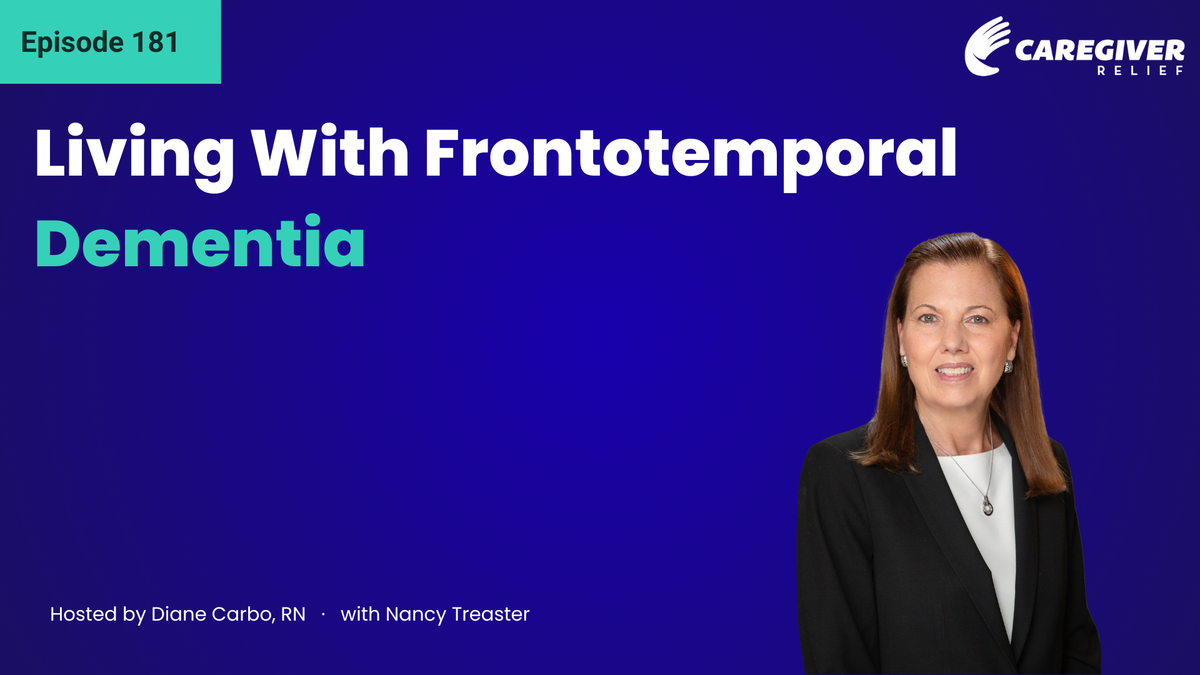
Living With Frontotemporal Dementia (FTD) with Nancy Treaster - Episode 181
Frontotemporal Dementia (FTD) is a diagnosis that often turns a family's world upside down before they even know what they are fighting. Unlike Alzheimer’s, it doesn't always start with memory loss—it starts with the theft of personality, language, and behavior.
In this powerful episode of the Caregiver Relief Podcast, host Diane Carbo, RN, sits down with Nancy Trier. Nancy shares her raw, nine-year journey caregiving for her husband, Kim, who was diagnosed in his late 50s. This is a story of moving from the frustration of "Why is he being a jerk?" to the profound peace of "How can I honor his dignity today?"
📋 Episode Outline & Key Takeaways
1. The "Hidden" Early Signs 🕵️♂️
- Personality Shifts: Nancy describes the confusion of watching a gregarious, empathetic man become dismissive and financially impulsive—behaviors often mistaken for a midlife crisis.
- The Language Gap: Early symptoms included "jibber-jabber," using wrong words (like "tuck" for "truck"), or losing the names of everyday objects.
2. The Battle for a Diagnosis 🩺
- Medical Gaslighting: Their first neurologist dismissed Kim’s symptoms as mere "anxiety," ignoring Nancy’s baseline knowledge of her husband.
- Primary Progressive Aphasia (PPA): How they finally found a specialist who recognized the language-variant of FTD and the battery of tests required to confirm it.
3. When Your Spouse Becomes a Stranger 💔
- The Loss of Recognition: Nancy shares the heartbreaking moment Kim began treating her like a "guest" in their home, eventually asking her to help him find his "real" wife.
- The "Man in the Mirror": A fascinating and poignant look at "mirror sign," where Kim befriended—and later feared—his own reflection.
4. Navigating Aggression & Safety 🛡️
- The Reality of Sedation: A candid discussion on using medication not to "dope" a patient, but to provide relief from the intense fear and agitation that fuels FTD aggression.
- Caregiving in the Home: Why the physical and behavioral demands of FTD make home care nearly impossible for families with young children.
5. Finding Peace Through Acceptance ✨
- "Drip Grief": Understanding anticipatory grief—the "punch in the gut" every time a new ability is lost.
- Choosing Your Perspective: How Nancy shifted from grieving what was lost to being grateful for what remained, ultimately treating her husband with the dignity she would want for herself.

💡 Nancy’s Advice for New FTD Caregivers
- Educate Early: Learn the specific phases of FTD; it moves differently than Alzheimer's.
- Peek, Don't Stare: Look around the corner to be prepared, but don't live in the "rat hole" of future terrors. Stay in the moment.
- Seek Specialized Support: Connect with the Association for Frontotemporal Degeneration (AFTD) for resources and support groups.
🔗 Resources Mentioned
- The Caregiver’s Journey: Co-founded by Nancy, featuring the "Caregiving Roadmap" with 20 essential steps for dementia care.
Remember: You are the most important part of the caregiving equation. Be gentle with yourself today. ❤️
💬 Got a Question? Ask the Expert!
Caring for a loved one can be overwhelming — but you're not alone. If you have questions, big or small, our expert team is here to help.
👉 Click here to Ask the Expert
Caring for a loved one can be overwhelming — but you're not alone. If you have questions, big or small, our expert team is here to help.
👉 Click here to Ask the Expert
💡
Do you need help caring for a loved one?
Our Resource section can help you find the information and tools that you need. We have courses, videos, checklists, guidebooks, cheat sheets, how-to guides and more.
You can get started by clicking on the link below. We know that taking care of a loved one is hard work, but with our help you can get the support that you need.
Click here to go to Resource Section now!
Our Resource section can help you find the information and tools that you need. We have courses, videos, checklists, guidebooks, cheat sheets, how-to guides and more.
You can get started by clicking on the link below. We know that taking care of a loved one is hard work, but with our help you can get the support that you need.
Click here to go to Resource Section now!